
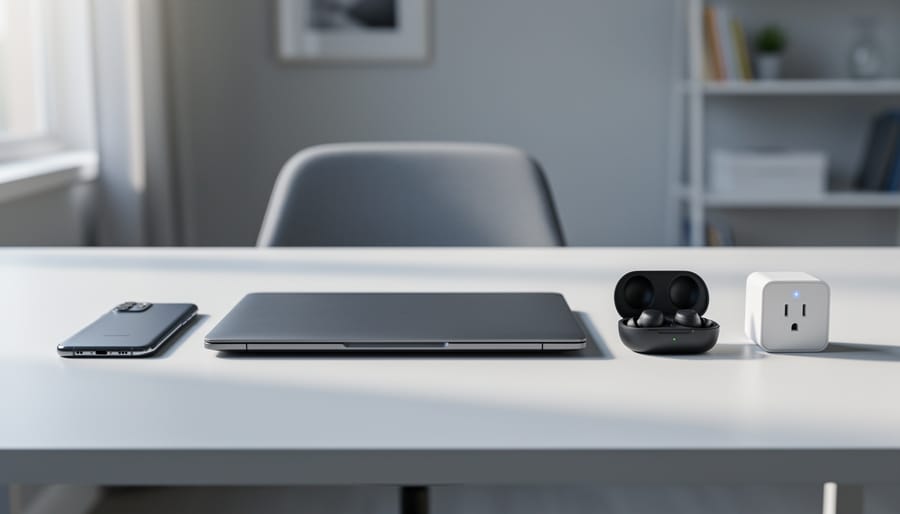
Budget electronics span a wide price spectrum, with entry-level smartphones typically starting around $100 to $300, budget laptops ranging from $250 to $600, wireless earbuds from $20 to $80, and smart home devices between $25 and $100. Understanding these baseline costs helps buyers set realistic expectations and identify genuine value versus false economy.
What separates a $150 smartphone from a $250 model often comes down to processor speed, camera quality, storage capacity, and brand reputation. Similarly, budget laptops at the lower end sacrifice build quality and performance for affordability, while mid-budget options incorporate solid-state drives, better displays, and more reliable components. These distinctions matter because a device priced $50 lower might cost hundreds more in frustration or early replacement.
The budget electronics market has matured considerably, with manufacturers offering competitive features at accessible price points. Customer feedback consistently shows that savvy buyers who research specifications, read verified reviews, and compare warranties get substantially better value than those who simply chase the lowest sticker price. Refurbished options add another layer of complexity, sometimes matching new budget models in performance while undercutting them by 20 to 40 percent.
Making the right choice requires understanding not just what products cost, but why they cost what they do and which features justify premium pricing within the budget segment.
Budget Electronics Cost by Category
Budget Smartphones and Mobile Devices
Budget smartphones in 2026 typically range from $80 to $300, with distinct tiers offering progressively better capabilities. Entry-level models ($80-$150) provide basic functionality with 32-64GB storage, 720p displays, and modest cameras suitable for calls, messaging, and light social media use. These devices often run on older processors but handle everyday tasks adequately.
Mid-budget smartphones ($150-$300) represent the sweet spot for most buyers. Expect 64-128GB storage, 1080p displays, decent battery life lasting a full day, and multi-lens camera systems that produce acceptable photos in good lighting. Many include 5G connectivity and receive security updates for at least two years. Brands like Motorola, Samsung’s A-series, and various Chinese manufacturers dominate this segment.
Feature phones remain available for $20-$50, appealing to those wanting only calls and texts without smartphone complexity. Basic tablets start around $100 for 8-inch models with limited storage and performance, while $150-$250 tablets offer 10-inch screens and sufficient power for streaming, web browsing, and reading.
The $200-$250 range delivers the best value proposition, offering most features average users need without premium pricing. Processor speed, camera quality, and build materials are the primary compromises compared to flagship devices.
Budget Computing: Laptops and Tablets
Budget laptops typically range from $250 to $600 in 2026, with distinct performance tiers within this spectrum. Entry-level Windows laptops ($250-$350) usually feature Intel Celeron or AMD Athlon processors, 4GB RAM, and 64GB eMMC storage. These handle basic web browsing, email, and light document editing but struggle with multitasking or media editing.
Mid-budget laptops ($350-$500) offer meaningful upgrades: Intel Core i3 or AMD Ryzen 3 processors, 8GB RAM, and 128GB-256GB SSD storage. These manage everyday productivity tasks, video streaming, and light photo editing comfortably. Expect 1080p displays and better build quality at this price point.
Chromebooks occupy a sweet spot for budget computing, priced between $200 and $400. They deliver smooth performance for web-based tasks despite modest specifications because Chrome OS requires fewer resources than Windows. Models above $300 typically include touchscreens and longer battery life.
Budget tablets start around $100 for basic Android models with 10-inch displays and 32GB storage. Amazon Fire tablets offer the lowest entry point ($80-$150) but limit you to Amazon’s ecosystem. Apple’s base iPad ($329) costs more but provides superior performance and longevity compared to Android alternatives at similar prices.
Budget Audio and Entertainment Devices
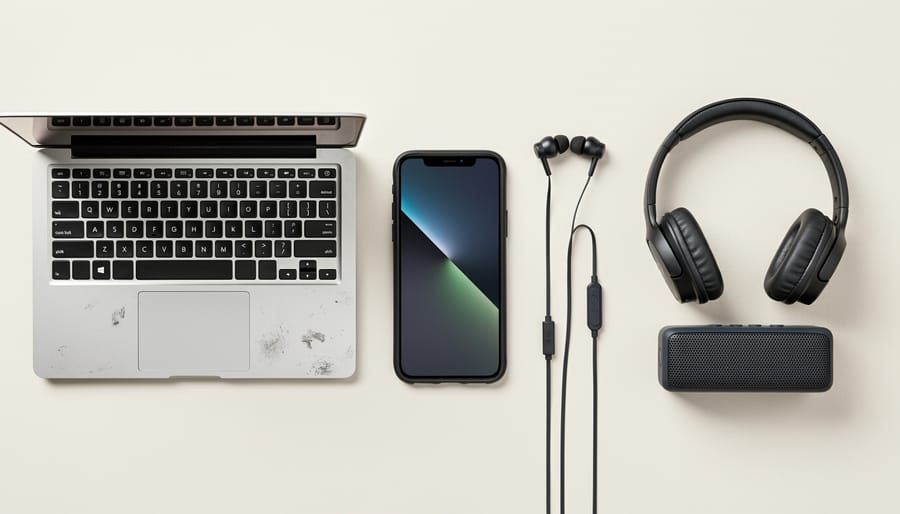
Budget headphones start at $15-25 for basic wired models with acceptable sound quality for casual listening. In the $30-50 range, you’ll find wireless over-ear headphones with decent battery life (15-20 hours) and improved audio clarity, though noise cancellation remains limited or absent.
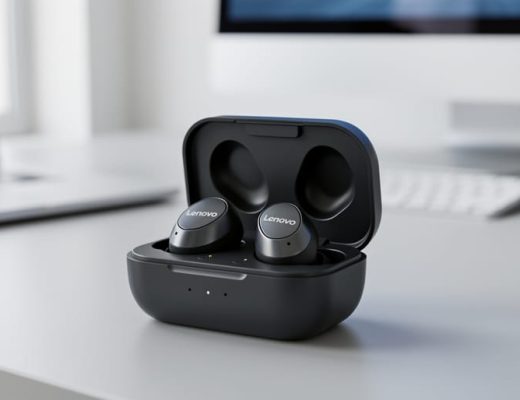
Wireless earbuds follow a similar pattern. Entry-level options cost $20-35 and deliver adequate performance for calls and music, albeit with shorter battery life (4-5 hours per charge). Mid-budget earbuds at $40-70 offer better fit, improved sound separation, and extended playtime (6-8 hours), making them suitable for commuting and workouts.
Portable Bluetooth speakers range from $25-40 for compact models with 8-10 hours of playback and basic water resistance. At $50-80, expect fuller sound, longer battery life (12-20 hours), and enhanced durability ratings like IPX7 waterproofing.
Streaming devices represent exceptional value in budget electronics. Basic streaming sticks cost $25-35 and support HD streaming from major platforms. Premium budget options at $40-55 add 4K capability, voice remote functionality, and smoother interface navigation. These devices deliver performance comparable to built-in smart TV systems at a fraction of the replacement cost.
What’s Included in Budget Electronics Pricing
When you see a budget smartphone listed at $149 or a basic laptop at $299, that advertised price is just the starting point. Understanding what’s actually included, and what you’ll need to purchase separately, prevents unwelcome surprises and helps you budget accurately for your actual total investment.
What the Purchase Price Includes
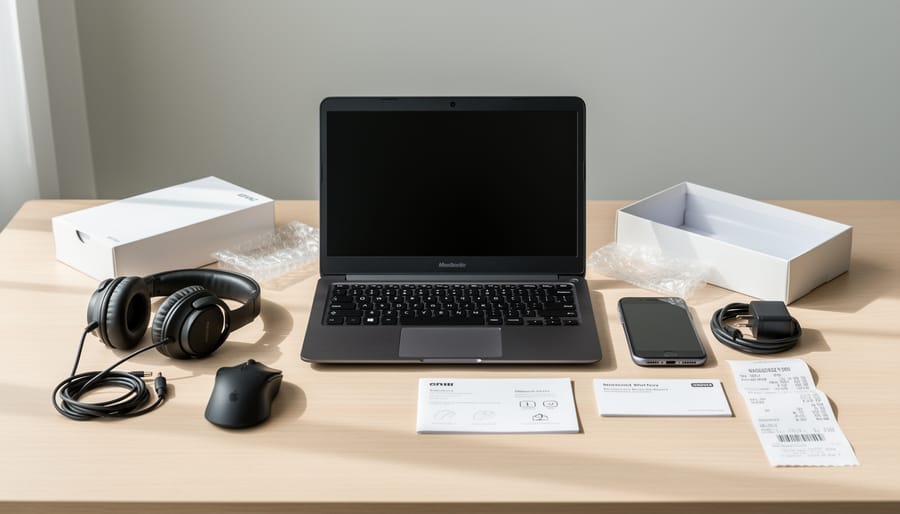
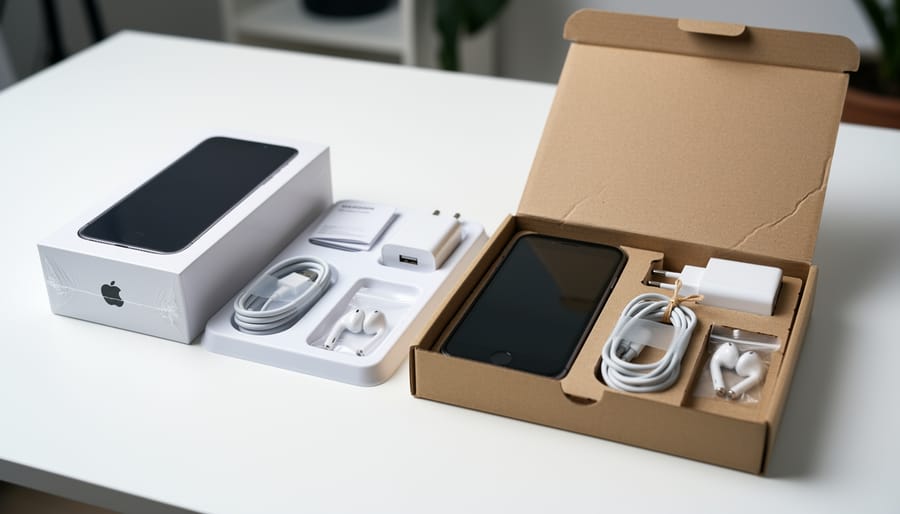
Most budget electronics come with the essential minimum needed to start using the device. Smartphones typically include a charging cable (though often USB-C to USB-A rather than a wall adapter), basic earbuds in some cases, and a SIM ejector tool. Laptops arrive with their power adapter and cable. Tablets usually include a charging cable but rarely a case or screen protector.
Budget devices generally ship with a standard manufacturer warranty, typically 90 days to one year depending on the brand. This covers manufacturing defects but excludes accidental damage. The operating system comes pre-installed, Android, Chrome OS, or Windows in S mode for most budget options, along with standard system apps. Some manufacturers pre-load trial versions of antivirus software or productivity suites that expire after 30 days.
Common Inclusions Versus Extra Costs
- Included: Charging cable, basic warranty (90 days to 1 year), pre-installed OS, system applications
- Typically costs extra: Wall charging adapter (increasingly common), protective cases, screen protectors, extended warranties
- Subscription-based extras: Cloud storage beyond free tier (5-15GB), premium software licenses, streaming service trials that auto-renew
- Essential add-ons: MicroSD cards for expandable storage, higher-quality audio accessories, HDMI cables or adapters
The gap between advertised price and real cost widens when you factor in accessories. A $179 tablet might need a $35 case, a $25 screen protector, and a $40 microSD card to reach functional usability. Budget laptops with 64GB storage often require external drives ($50-80) or cloud subscriptions ($2-10 monthly) almost immediately.
Many budget devices ship with bloatware, pre-installed apps from third parties that generate revenue for manufacturers. While removable, these apps sometimes push paid upgrades or subscriptions. Read the fine print on any “free trials” included with your purchase; they typically require a credit card and auto-renew unless you actively cancel before the trial period ends. The advertised price gets you the hardware, but the complete, protected, and fully functional setup usually costs 20-40% more than the sticker price suggests.
Factors That Affect Budget Electronics Prices
Brand vs. Generic Manufacturers
Established electronics brands typically charge 20-40% more for their budget-tier products compared to generic manufacturers offering similar specifications. This price premium reflects investment in quality control, customer service infrastructure, and brand marketing rather than superior components in many cases.
Major brands like Samsung, HP, and Sony maintain budget lines that cost $50-100 more than equivalent no-name alternatives. You’re paying for reliable warranty support, easier access to replacement parts, and software updates that generic manufacturers rarely provide. However, the actual hardware, processors, displays, batteries, often comes from the same third-party suppliers used by lesser-known brands.
Generic manufacturers from markets like China and Southeast Asia achieve lower prices through minimal marketing budgets, direct-to-consumer sales models, and streamlined product lines. Brands such as TCL, Realme, and various Amazon-exclusive labels deliver comparable performance but with shorter warranty periods (typically one year versus two) and limited service centers.
The trade-off isn’t always straightforward. Established brands offer peace of mind and resale value, while generic options maximize immediate specifications for your budget. Your decision should weigh support needs against upfront savings.
Feature Trade-offs in Budget Models
Budget electronics manufacturers strategically reduce costs by compromising on specific features while maintaining core functionality. Display quality represents one of the most common trade-offs, budget models typically use lower-resolution LCD panels instead of OLED or higher refresh rate screens. Build materials shift from premium glass and metal to plastic housings, though structural integrity usually remains adequate for everyday use.
Processing power sees deliberate scaling back. Budget laptops and smartphones use entry-level chipsets that handle basic tasks but struggle with intensive applications, multitasking, or gaming. Storage capacity drops significantly, with many budget devices offering 32GB to 64GB rather than 128GB or higher.
Camera systems in budget phones reduce megapixel counts, eliminate multiple lenses, and lack advanced features like optical image stabilization or night mode. Audio quality suffers through smaller speakers and omitted features like stereo sound or noise cancellation in budget headphones.
Manufacturers typically preserve essential features: battery capacity remains competitive, basic connectivity standards are included, and operating systems function fully. The trade-offs center on premium experiences rather than fundamental usability. Understanding these specific compromises helps buyers determine which features matter most for their intended use case and whether budget models meet their actual needs.
Regional and Retailer Price Variations
Budget electronics prices fluctuate significantly based on where and when you buy. Regional variations stem from import duties, taxes, and local market competition. The same budget smartphone might cost $150 in the US, £130 in the UK, or ₹12,000 in India due to these factors.
Retailer choice matters substantially. Big-box stores typically offer consistent pricing but fewer discounts, while online marketplaces feature competitive pricing with frequent flash sales. Warehouse clubs provide bulk discounts on electronics bundles. Direct-from-manufacturer purchases often undercut retail prices by 10-20%, though customer service may be limited.
Timing purchases strategically saves money. Black Friday, Cyber Monday, and back-to-school periods bring 20-40% discounts on budget electronics. End-of-quarter clearances and new model launches push previous-generation budget devices even lower. Mid-week online sales and holiday weekends consistently offer better deals than regular shopping periods.
Buying New vs. Refurbished Budget Electronics
When deciding between new budget electronics and refurbished higher-tier models, you’re essentially choosing between two value propositions at similar price points. A new budget smartphone might cost $200, while a refurbished flagship model from two years ago sits at the same price. The same dynamic plays out across laptops, tablets, and audio equipment.
New budget electronics offer the advantage of never-been-used condition with full manufacturer warranties, typically ranging from one to two years. You get current-generation connectivity standards, the latest software support timeline, and no uncertainty about previous usage patterns. A new $250 budget laptop includes a fresh battery with full capacity and no wear on the keyboard or trackpad. You also benefit from modern energy efficiency improvements and, in some product categories, better repairability under right-to-repair regulations that took effect in recent years.
Refurbished premium models present a different value equation. That same $250 might buy you a certified refurbished laptop that originally sold for $700, bringing significantly better build quality, a superior display, faster processor, and more premium materials. Certified refurbishment programs from major manufacturers typically include inspection, replacement of worn components, and warranties ranging from 90 days to one year. However, you’re purchasing technology that’s at least one to three years old, meaning shorter remaining software support and potentially higher future repair costs as components age.
- New budget models include full manufacturer warranty and guaranteed software support timeline
- Refurbished premium models offer superior build quality and performance at the same price point
- New devices have fresh batteries with full capacity and zero prior wear
- Refurbished flagships provide better displays, materials, and features than budget equivalents
- New budget models compromise on build quality, display resolution, and performance capabilities
- Refurbished devices have shorter remaining support lifecycles and potentially higher repair costs
- New budget electronics may lack premium features standard in older flagships
- Refurbished warranty periods are typically shorter than new product coverage
The optimal choice depends on your priorities and usage patterns. If you need a device that will receive software updates for the next four to five years and want predictable longevity, new budget models make sense despite feature limitations. If build quality, performance, and premium features matter more than maximum future support, and you’re comfortable with a shorter warranty, refurbished flagships deliver superior specifications at budget prices. For items like headphones and speakers where software updates matter less, refurbished premium models often represent the stronger value proposition.
How to Maximize Value When Buying Budget Electronics
Getting the most value from budget electronics requires strategic shopping rather than simply choosing the cheapest option. By applying a few practical approaches, you can significantly improve the quality-to-price ratio of your purchases.
Timing Your Purchase Strategically
Major sales events consistently offer the best opportunities for budget electronics deals. Black Friday, Cyber Monday, and back-to-school periods typically feature discounts of 15-30% on already-affordable models. January clearance sales help retailers move inventory before new model releases, creating genuine bargains. Prime Day and similar retailer-specific events focus heavily on electronics categories. Shopping during these windows can stretch a $200 budget to capture products that normally sell for $250-280.
Smart Comparison Shopping
Focus on specifications rather than brand names when comparing budget options. A lesser-known manufacturer offering 128GB storage and 6GB RAM at $180 often outperforms a recognized brand with 64GB storage and 4GB RAM at the same price. Create a simple comparison chart listing the features you actually need, display quality, battery capacity, processing power, then evaluate which model delivers best on those specific points.
- Check multiple retailers for the same model; price differences of $20-50 are common
- Read customer reviews focusing on long-term reliability, not just initial impressions
- Verify warranty coverage and understand what’s included versus extended protection plans
- Test return policies before buying; generous return windows protect your investment
- Prioritize one or two critical features over having mediocre versions of everything
- Search for coupon codes before checkout; browser extensions can automate this step
Authentic customer reviews matter more than marketing claims. Look for patterns across multiple reviews mentioning battery life, build quality, or software performance. Reviews mentioning specific use cases similar to yours provide the most reliable guidance. A budget laptop praised for video streaming might disappoint for photo editing, even though both seem like basic tasks.
The smartest budget buyers identify their primary use case, then find models that excel in that specific area rather than attempting to cover all possible needs.
Cost by primary variable
Budget electronics pricing varies significantly depending on the product category you’re shopping in. Entry-level smartphones typically start around $100-150 for basic Android devices with limited storage and older processors, while mid-budget options in the $200-350 range offer better cameras, more RAM, and longer software support. Budget laptops fall into two distinct tiers: Chromebooks begin at $200-300 with cloud-focused functionality, while Windows laptops with local storage start around $350-500.
Tablets occupy a similar range, with basic Android tablets available from $80-150 and more capable models reaching $250-400. Audio equipment shows the widest spread, acceptable budget earbuds start at $20-40, while quality wireless headphones range from $50-120. Smart home devices like basic security cameras, smart plugs, and LED bulbs typically cost $15-50 per unit, making them the most accessible budget category.
Wearables present a middle ground, with fitness trackers starting at $30-60 and budget smartwatches ranging from $80-200 depending on features and ecosystem compatibility.
DIY vs pro
Most budget electronics purchases don’t require professional assistance, you can research specifications, compare models, and complete transactions independently through online retailers or physical stores. This approach costs nothing beyond the product price and gives you full control over timing and selection.
However, professional services become valuable in specific scenarios. Tech consultants ($50-150 per session) help businesses select multiple devices that integrate properly, potentially saving money through bulk purchasing guidance and compatibility assurance. For complex home setups involving multiple budget smart devices, professional installers ($75-200) ensure proper configuration and network integration.
Corporate buyers often use procurement specialists who negotiate volume discounts and handle warranty management across fleets of budget devices. These services typically cost 5-10% of purchase value but can reduce per-unit costs by 15-25% on larger orders.
For individual consumers buying one or two items, the DIY approach makes financial sense. Professional services justify their cost primarily for businesses, extensive smart home installations, or buyers who lack confidence navigating technical specifications and compatibility requirements.
Budget electronics in 2026 offer viable options across most product categories, with smartphones starting around $100, laptops from $200, and audio devices from $20. While these price points make technology accessible, the real value comes from understanding what you’re getting at each tier. A $150 smartphone won’t match a flagship’s camera system, but it handles essential tasks reliably for most users.
Smart purchasing means looking beyond the sticker price. Compare actual specifications rather than marketing claims, read verified customer reviews to understand real-world performance, and identify which features genuinely matter for your intended use. A device with slightly better build quality or longer software support often proves more economical than the absolute cheapest option.
What’s a reasonable budget for a reliable smartphone in 2026?
Most reliable budget smartphones cost between $150 and $300, offering decent performance, adequate cameras, and software support for 2-3 years.
Are budget electronics worth buying, or should I save for premium models?
Budget electronics work well for basic to moderate use cases. Save for premium only if you need specific advanced features that budget models can’t provide.
When’s the best time to buy budget electronics?
Major sales events like Black Friday, back-to-school periods, and new model launches typically bring the deepest discounts on budget electronics.
The budget electronics market rewards research and patience. Your usage patterns should drive your purchase decision more than any single factor. Casual users often find budget options exceed their needs, while power users might hit limitations quickly. Match the device to your actual requirements, not aspirational ones.


No Comments