
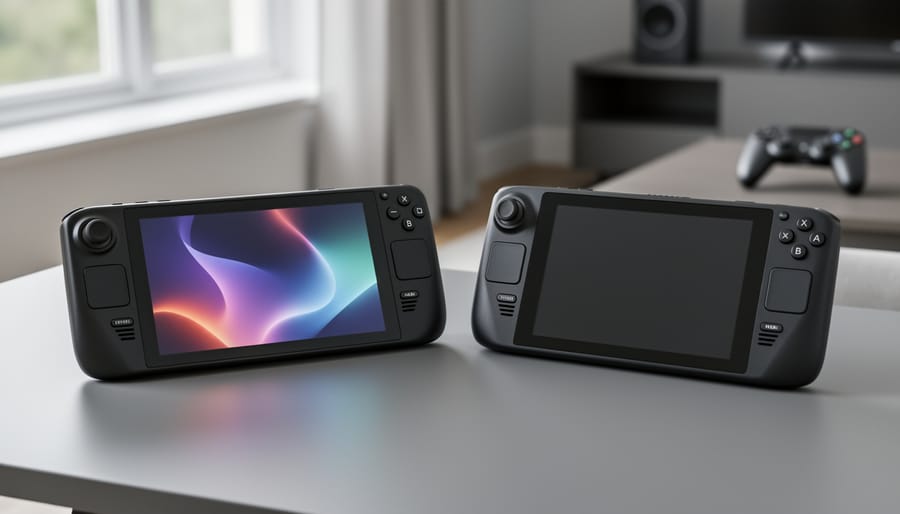
The Steam Deck OLED is the better choice for most buyers, delivering 30-50% longer battery life and a vastly improved display without asking you to pay more than the original model cost at launch. Valve achieved this by fitting a larger battery into the same footprint and equipping the handheld with a more efficient OLED screen that draws less power, all while adding a quieter fan and faster Wi-Fi. The catch? Gaming performance remains identical to the original Steam Deck, so if you already own one and prioritize frame rates over screen quality and endurance, the upgrade may not justify the expense.
For those deciding between the two models or evaluating whether to upgrade, the comparison hinges on three dimensions: battery endurance, display technology, and value proposition. The original Steam Deck remains a capable portable PC, but the OLED version addresses its two most significant weaknesses without inflating the price. Understanding which model fits your gaming habits and budget requires examining the specific hardware differences Valve introduced and how they translate to real-world use across different game libraries and play sessions.
Steam Deck OLED vs Original: At-a-Glance Comparison
The Steam Deck OLED represents a refinement of Valve’s handheld PC rather than a complete overhaul. While both models deliver identical gaming performance, the OLED version brings meaningful improvements to battery life, display quality, and thermal management that enhance the overall experience without changing what games you can play or how they run.
| Feature | Original Steam Deck | Steam Deck OLED |
|---|---|---|
| Display Type | LCD | OLED |
| Battery Life | Baseline | 30-50% longer |
| Fan Design | Original | Updated, more efficient |
| Gaming Performance | Same APU | Same APU |
| Starting Price | Lower | $789.00 |
The battery improvement stems from two factors: Valve fit a bigger battery into the case, and the OLED display itself draws less power than the original LCD. This combination extends gaming sessions substantially without requiring you to stay near an outlet. The updated fan runs quieter while maintaining effective cooling, addressing one of the common criticisms of the original model. Despite these enhancements, the core gaming hardware remains unchanged, meaning both versions run titles at the same frame rates and visual settings. The choice between them comes down to whether the quality-of-life upgrades justify the price difference for your specific needs.
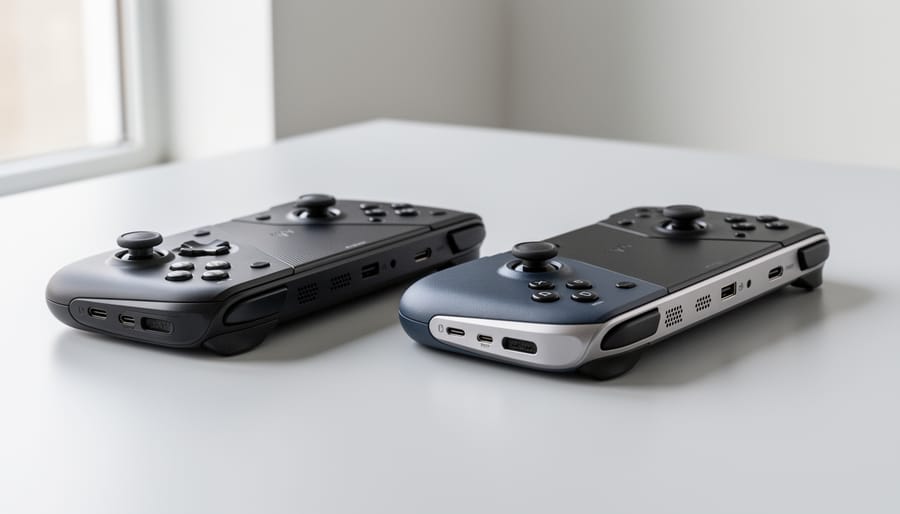
What Each Option Is

The Original Steam Deck
The Original Steam Deck is Valve’s first foray into handheld PC gaming, bringing the full Steam library to a portable form factor. It runs SteamOS, giving players access to thousands of PC games verified for handheld play. The device carved out a new category between dedicated gaming handhelds and full laptops, offering performance comparable to lower-spec gaming PCs in a device you can hold in your hands.
At launch, the original model arrived with an LCD screen, ranging from 64GB to 512GB storage configurations. Despite early skepticism about whether PC gaming could work in a handheld format, it proved the concept viable and built a loyal following. The device democratized portable PC gaming at a lower price point than competitors, establishing Valve’s Steam Deck as the benchmark others chase. Its success paved the way for refinements, including the OLED version that addresses its most commonly cited limitations while keeping the core experience intact.
The Steam Deck OLED
The Steam Deck OLED represents Valve’s refined take on its handheld gaming PC, not a generational leap but a thoughtful collection of hardware improvements. Released as an enhanced version of the original model, it addresses key user experience elements rather than raw performance metrics.
The centerpiece upgrade is the OLED screen, delivering richer colors and deeper blacks compared to the LCD panel in the original. Beyond the display, Valve engineered meaningful battery improvements through two complementary changes: a larger battery fits into the same form factor, while the OLED technology itself consumes less power during gameplay. Together, these modifications extend gaming sessions by 30-50% over the original model.
Valve also integrated a more efficient cooling fan that runs quieter during extended play. The refinements extend to build quality details and ergonomic touches throughout the device. What hasn’t changed is the core gaming performance, both versions run games identically. The OLED model starts at $789.00, positioning it as a premium option for users who value extended battery life and superior visual quality over budget considerations.
Dimension-by-Dimension Comparison
Battery Life and Power Efficiency
The Steam Deck OLED delivers 30-50% longer gaming sessions than the original model, a leap that stems from two hardware changes working in tandem. Valve managed to fit a larger battery into the case without increasing overall size, while the OLED panel itself consumes less power than the original LCD screen. This combination transforms the handheld’s endurance from acceptable to genuinely impressive for power on the go.
The improvements break down to:
- Increased battery capacity from the physically larger cell Valve installed
- Reduced power draw from the OLED display compared to the original LCD panel
- Extended sessions that can stretch from three hours to over four on demanding titles
In practical terms, the OLED model pushes battery-draining AAA games past the four-hour mark where the original would tap out around three hours. Less demanding indie titles can run for six to seven hours on a charge, compared to four to five on the LCD version. The difference matters most during long flights, commutes, or anywhere you can’t reach an outlet for several hours. You’re not just squeezing out a few extra minutes, the OLED model genuinely changes how confidently you can game away from a charger. The more efficient fan Valve added also contributes to the overall power savings, though the battery and display upgrades carry the bulk of the improvement.

Display Quality and Visual Experience
The OLED model replaces the original’s LCD screen with a vibrant OLED panel that delivers immediately noticeable improvements in visual quality. Colors appear more saturated and accurate, while blacks are truly black rather than the grayish tone of LCD technology. This creates a contrast ratio that makes game environments pop, particularly in titles with dark scenes or atmospheric lighting.
The OLED screen handles HDR content significantly better, with deeper shadow detail and brighter highlights that enhance immersion without becoming overwhelming. In fast-paced games, the improved response time reduces motion blur compared to the LCD panel. The overall effect is a richer, more engaging visual experience that makes games feel more premium.
For the original Steam Deck, the LCD display remains perfectly functional for gaming. It delivers adequate color reproduction and brightness for most scenarios, though side-by-side comparisons reveal its limitations in contrast and vibrancy. The LCD’s slightly washed-out appearance becomes most apparent in darker game environments or when viewing the screens together.
The visual upgrade doesn’t affect frame rates or game compatibility, both models run identical software at the same performance levels. The OLED’s advantage is purely in how games look, not how they run, making it a quality-of-life improvement rather than a performance necessity.
Thermal Performance and Fan Noise
The OLED model ships with a redesigned fan that’s noticeably quieter than the original unit. During extended gaming sessions, the difference becomes clear: where the first Steam Deck’s fan could ramp up to an audible whir under load, the updated version stays considerably more subdued. This isn’t just a minor tweak, the new fan runs more efficiently while moving the same amount of air, which translates to less intrusive noise when you’re deep into a demanding game.
Cooling performance remains solid across both models. Neither device struggles with thermal throttling during typical play, but the OLED’s quieter operation makes long sessions more pleasant, especially in handheld mode where the device sits close to your face. If you’ve ever found yourself distracted by fan noise on the original model during intense moments, the OLED addresses that specific annoyance without compromising the cooling system’s effectiveness. The improvement won’t change how games run, but it does refine the overall experience in a way you’ll notice immediately.
Gaming Performance
If you’re expecting a significant performance boost when you upgrade to the Steam Deck OLED, you’ll be disappointed. Both models run identical AMD APUs with the same CPU and GPU configurations, which means frame rates, load times, and in-game settings remain unchanged between versions. This is exactly what reviewers meant when they described the OLED as “better, not faster.”
You’ll play the same games at the same settings with the same performance ceiling on either device. The OLED model doesn’t run cooler under load or unlock higher frame rates. What has changed is everything around the performance: you get a superior visual experience through the OLED screen, longer gaming sessions thanks to improved battery life, and a quieter fan during those sessions. But the actual computing power pushing your games stays constant.
This consistency makes the choice simpler. If you own the original and crave better frame rates or newer game compatibility, the OLED won’t deliver that. The upgrade is about refinement and comfort, not capability.
Pricing and Value Proposition
The Steam Deck OLED starts at $789.00, while the original model remains available at a lower entry point. In Canada, the 512GB OLED version carries a price of CAD 1,129. This pricing structure positions the OLED as a premium option rather than a replacement for the base model.
The value equation hinges on what you prioritize. The OLED’s improvements, 30-50% longer battery life, superior display quality, and quieter fan operation, justify the premium for players who spend hours gaming away from an outlet or who value visual fidelity. The bigger battery and more efficient OLED panel combine to deliver meaningfully extended sessions, which can transform how you use the device.
For budget-conscious buyers, the original Steam Deck delivers identical gaming performance at a lower cost. Since both models run the same games at the same frame rates, choosing the base version doesn’t compromise your library or capabilities. The question becomes whether the budget electronics cost savings outweigh the quality-of-life upgrades.
Reviewers noted that Valve’s pricing improvements make the OLED version more accessible than expected, positioning it as a refined experience upgrade rather than a luxury tier.
Build Quality and Additional Improvements
Beyond the headline upgrades, the Steam Deck OLED includes refinements that enhance the overall experience. Reviewers noted improvements to button feel and responsiveness, contributing to a more polished handheld. The chassis benefits from subtle ergonomic tweaks that make extended gaming sessions more comfortable. While the original Steam Deck established solid build quality, the OLED version represents a thoughtful iteration with accumulated small enhancements throughout the device that collectively elevate the user experience.
Who Should Choose Which Model
The Steam Deck OLED suits anyone who values longer gaming sessions without charging breaks, given its 30-50% battery life improvement. If you frequently game away from power outlets or play demanding titles that drain the battery quickly, the OLED’s bigger battery and more efficient display make it the clear choice.
The original Steam Deck remains a solid option if you’re working within a tighter budget. Both models deliver identical gaming performance, so you’re not sacrificing frame rates or graphical fidelity by choosing the original version. Pair it with a best budget earbuds or other budget audio upgrade and you’ll have a complete handheld gaming setup without stretching your finances.
- Budget-Conscious Gamers
- Choose the Original Steam Deck if you find it at a reduced price, prioritizing gaming performance over battery life and display improvements. Both models run the same games at identical settings.
- Battery Life Prioritizers
- Select the OLED model for its 30-50% longer battery life, ideal for extended gaming sessions away from charging access. The combination of a bigger battery and more efficient display makes a noticeable difference.
- Visual Quality Enthusiasts
- The OLED version delivers superior color accuracy and contrast ratios that enhance every game. If display quality significantly impacts your enjoyment, the visual upgrade justifies the investment.
- Performance-Focused Players
- Either model works equally well since they share the same gaming performance capabilities. Your choice depends entirely on whether you value the OLED’s refinements over saving money.
Consider how you’ll actually use the device. If you primarily game at home near a charger, the original’s shorter battery life matters less. But if you commute frequently or travel often, those extra hours on a single charge become essential rather than just nice to have.
The OLED’s quieter, more efficient fan also benefits anyone sensitive to noise during gameplay. This improvement combines with the display and battery upgrades to create a more polished overall experience, though it doesn’t change what games you can play or how well they run.
Customer Feedback and Real-World Experience
Owners consistently describe the OLED model as a refinement of an already solid device rather than a revolutionary upgrade. The consensus centers on tangible quality-of-life improvements: users appreciate the noticeably longer battery life during extended sessions, the vibrant screen that makes games pop without cranking brightness, and the quieter fan that doesn’t intrude during intense gameplay. Many who upgraded from the original model say the cumulative effect of these changes makes the OLED their preferred way to play, even though frame rates remain identical.
Original Steam Deck owners report high satisfaction with their units, particularly those who prioritized getting into handheld PC gaming at a lower entry point. They note that game compatibility and performance haven’t changed between versions, so their devices still handle the same library equally well. Some pair their Deck with wireless gaming audio to enhance the experience without hardware upgrades.
The divide comes down to priorities: OLED adopters value the premium feel and extended unplugged play, while original model owners appreciate proven performance at a more accessible price. Both groups emphasize that Valve delivered a competent handheld PC, with the OLED representing polish rather than reinvention.
Common Questions About Steam Deck Models
The questions buyers most often ask about choosing between Steam Deck models center on upgrade value, performance differences, battery gains, and compatibility. Here’s what you need to know.
Is the Steam Deck OLED worth upgrading from the original?
It depends on how much you value the improved display, longer battery life, and quieter fan. If you already own the original and it meets your needs, the upgrade isn’t essential since gaming performance remains identical.
Does the OLED model play games better than the original?
No, both models deliver the same gaming performance. The OLED version offers a better experience through its superior screen and extended battery, but frame rates and graphical capabilities are unchanged.
How much longer does the OLED battery last?
The OLED model provides 30-50% more battery life thanks to its larger battery and the lower power draw of the OLED display.
Are my games compatible across both Steam Deck models?
Yes, all games run identically on both versions. Your game library, saves, and settings transfer seamlessly between models since they share the same internal hardware and operating system.
The pricing difference raises another common question: whether the OLED’s $789 starting point justifies the extra cost over a discounted original model. For first-time buyers, the OLED represents better long-term value given the battery and display improvements. Existing owners should weigh whether those enhancements matter enough to justify replacing a device that still performs identically in actual gameplay.
Some buyers wonder whether Valve will release a more powerful Steam Deck soon, making either current model obsolete. While future hardware updates are always possible, both the original and OLED versions remain capable handheld gaming PCs that will continue receiving software support and running new releases for years to come.
The Steam Deck OLED delivers what Valve set out to create: a noticeably better handheld experience without changing the core gaming performance. You’ll get the same game library running at the same frame rates, but wrapped in a superior package with 30-50% longer battery life, a vibrant OLED display, and quieter operation during extended sessions.
Your decision comes down to priorities. If you value longer gaming sessions away from power outlets, prefer richer visual quality, and can afford the $789.00 starting price, the OLED model justifies its cost through accumulated quality-of-life improvements. The original Steam Deck remains a capable choice for budget-conscious buyers who prioritize raw gaming capability over refinements.
Neither version is objectively wrong. The OLED won’t run games faster or unlock new titles, but it makes every gaming session more comfortable and visually engaging. Consider how you’ll actually use the device, if portability and session length matter, the OLED’s battery alone shifts the value equation. If you’re primarily playing near power sources or watching your budget closely, the original delivers the same gaming experience for less money.




No Comments