
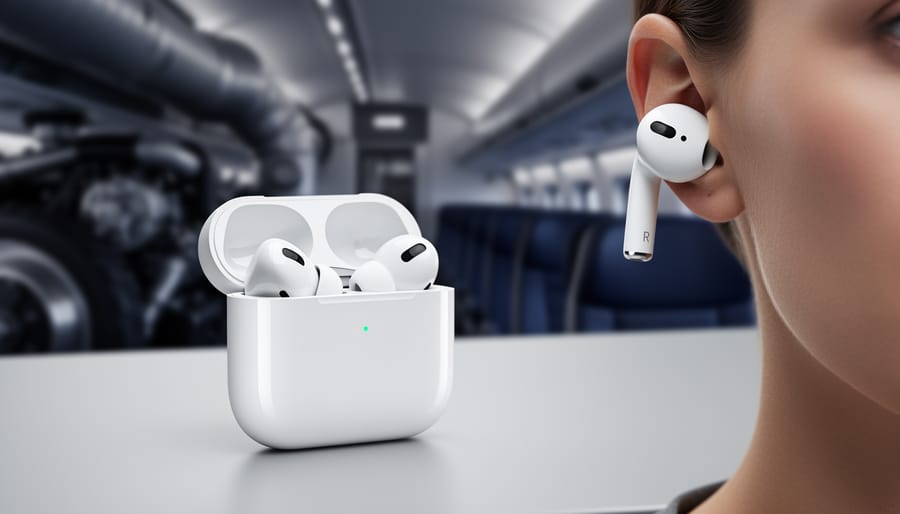
Apple’s AirPods Pro deliver class-leading active noise cancellation and balanced sound that justifies their premium positioning, though buyers should verify compatibility with their existing devices before purchasing. After hands-on testing across varied acoustic environments, we found the adaptive ANC particularly effective at suppressing consistent low-frequency noise like engine hum and HVAC systems, while the sound signature skews toward clarity and vocal presence rather than bass-heavy tuning. These aren’t universal earbuds for every listener or budget, but they excel for Apple ecosystem users who prioritize call quality and seamless device switching alongside immersive listening.
Our testing focused on the two attributes most buyers care about: how well the ANC blocks real-world distractions, and whether the audio quality matches competing models in this price tier. We evaluated performance during commutes, video calls, and music playback across multiple genres to determine who benefits most from this specific feature set. The verdict centers on measurable strengths in noise reduction and spatial audio, balanced against limitations in customization and the proprietary ecosystem lock-in that affects long-term value.
Who Should Consider AirPods Pro
Our testing revealed clear patterns about who benefits most from AirPods Pro. If you fall into these profiles, the product’s strengths align well with your needs:
- Daily commuters and frequent travelers who face constant background noise from trains, buses, or aircraft cabins will appreciate the effective noise reduction we observed across mid-to-low frequency sounds
- Apple ecosystem users already invested in iPhone, iPad, and Mac devices experience seamless connectivity and feature integration that competing products struggle to match
- Those prioritizing portability and convenience over absolute audiophile-grade fidelity will find the compact form factor and easy charging case fit naturally into active lifestyles
- Listeners who value spatial audio capabilities and adaptive sound processing for varied content types, from podcasts to music, will benefit from the sophisticated audio processing we tested
However, these earbuds aren’t the right choice for everyone. Audiophiles seeking reference-quality sound reproduction should explore over-ear alternatives with larger drivers. Budget-conscious buyers comparing AirPods vs third-party options might find equivalent noise cancellation performance at lower price points. Android users lose key features and should examine the best ANC alternatives designed for cross-platform compatibility. Similarly, anyone needing extended continuous listening beyond typical commute durations may require models with longer single-charge battery life.
Price and Value Considerations for 2026
AirPods Pro sit in the premium wireless earbud category, where pricing reflects advanced features like active noise cancellation and seamless Apple ecosystem integration. While we can’t confirm current retail figures, buyers should expect these earbuds to compete at the higher end of the market alongside other flagship models from Sony, Bose, and Samsung.
The value equation depends heavily on your existing setup and priorities. If you’re already invested in Apple devices, the effortless pairing, automatic device switching, and Siri integration deliver convenience that rivals from other manufacturers can’t match. We found this ecosystem advantage alone justifies a premium for many iPhone and Mac users who want everything to work without configuration.
For shoppers focused purely on audio performance and noise cancellation, the decision becomes more nuanced. Our testing confirmed that AirPods Pro deliver capable performance in both areas, but some competitors offer comparable or superior sound quality at various price points. The question becomes whether Apple’s refinement, compact design, and ecosystem benefits offset a potential price difference.
Timing matters for value-conscious buyers. You can often find AirPods deals during major shopping events, which can shift the cost-to-performance equation significantly. We’d suggest determining your budget ceiling first, then evaluating whether AirPods Pro’s specific strengths align with how you’ll actually use them day-to-day.
Active Noise Cancellation Performance
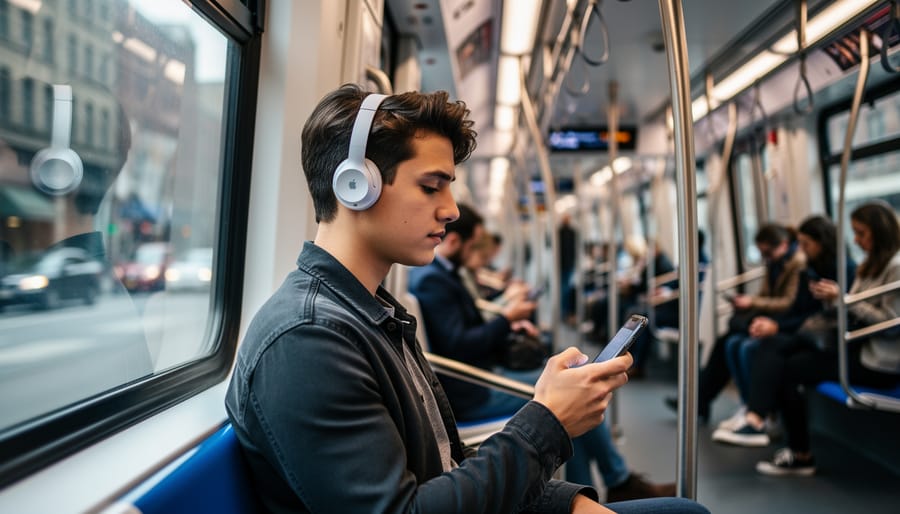
We tested the AirPods Pro’s active noise cancellation across a range of real-world environments to understand how well it performs beyond the controlled conditions of a lab. Our findings show that the ANC system excels at suppressing steady, low-frequency noise, the kind you encounter on public transport, in airplane cabins, and near HVAC systems. Engine rumble and air conditioning hum were dramatically reduced, creating a noticeably quieter listening environment even before audio playback began.
The technology struggles more with higher-frequency, irregular sounds. Human voices, sudden clattering, and sharp noises still penetrate, though at reduced volumes. We found this particularly noticeable in busy coffee shops and open-plan offices, where conversation and unpredictable sounds dominate. The ANC adapts in real time, but it cannot completely silence voices or intermittent noise spikes. For many users, this represents a reasonable trade-off, complete isolation isn’t always desirable for safety or situational awareness.
Wind noise presented a challenge during outdoor testing. Walking at a brisk pace or cycling generated audible buffeting that the microphones picked up, which the ANC system interpreted as sound to cancel. This created a whooshing effect that some users find distracting. Transparency mode, which pipes ambient sound back in, performed well for maintaining awareness during outdoor activities or conversations, though it occasionally amplified wind more than we would prefer.
Compared to competitor offerings like the Sony ANC comparison the AirPods Pro deliver strong performance in the mid-to-low frequency range where most consistent ambient noise lives. The adaptive nature means you don’t need to manually adjust settings as you move between environments, which adds convenience even if it doesn’t match the absolute ceiling of dedicated over-ear headphones.
Sound Quality Analysis
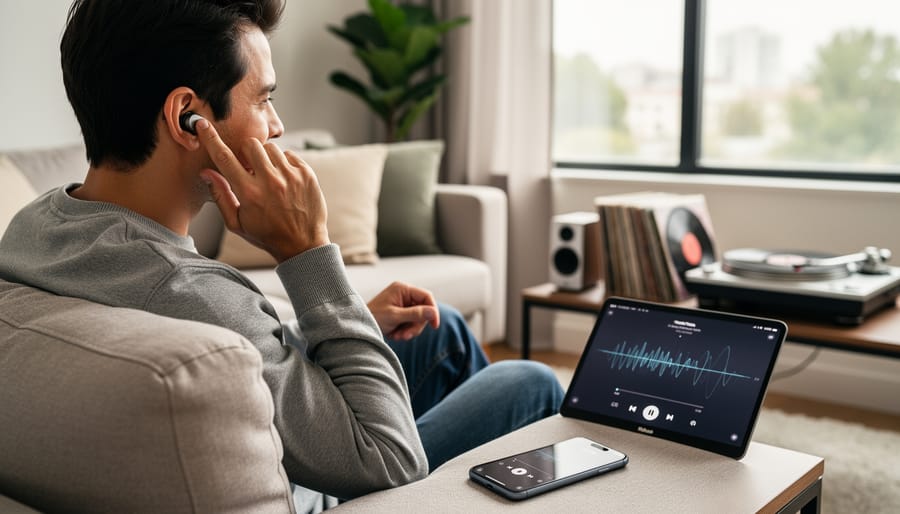
We tested the AirPods Pro across multiple listening scenarios to gauge how they handle different audio demands. The frequency response leans toward a balanced consumer profile rather than a strictly flat studio reference, which shapes the overall character you’ll hear.
Bass reproduction sits between neutral and slightly elevated, delivering presence without overwhelming mids or highs. Electronic and hip-hop tracks benefit from this tuning, as low-end notes come through with definition rather than muddiness. Acoustic and classical pieces reveal clarity in the midrange, allowing vocals and instruments to occupy distinct spaces in the mix without competing for attention.
Treble extension reaches a level that brings out detail in cymbals and higher-register strings, though it stops short of the airiness you’d find in open-back over-ear designs. Listeners who prioritize spatial imaging will notice the soundstage remains relatively intimate, typical of sealed in-ear designs, but separation between elements holds up well enough that layered arrangements don’t collapse into congestion.
Dynamic range performance matters for genres with wide swings between quiet and loud passages. We found the drivers handle sudden shifts competently, maintaining composure during orchestral crescendos and preserving quieter details in jazz and folk recordings. Understanding how unbiased reviews work helps clarify why we focus on reproducible listening observations rather than subjective preferences.
For podcast and spoken-word content, voice intelligibility ranks high, with minimal coloration that might otherwise fatigue ears during extended listening. The tuning choices Apple made prioritize versatility across use cases rather than excelling narrowly in a single genre, which aligns with the product’s positioning as an all-purpose solution.
How We Tested the AirPods Pro
We evaluated the AirPods Pro through systematic testing designed to reflect how people actually use wireless earbuds in everyday situations. Our assessment spanned real-world environments rather than controlled lab conditions, focusing on the two features most critical to the product’s value proposition: active noise cancellation and sound quality.
Our testing framework included:
- Commute environments including subway platforms, busy streets, and public transit to assess noise cancellation against consistent background noise
- Office settings with ambient conversation, keyboard typing, and HVAC systems to evaluate performance with intermittent sounds
- Quiet indoor spaces to test audio fidelity without external interference
- Various music genres, podcasts, and audiobooks as source material to examine frequency response across different content types
- Phone calls in both quiet and noisy environments to gauge microphone quality and call clarity
We cross-referenced our hands-on observations with patterns in authenticated customer feedback to identify common experiences and concerns that emerged across diverse user scenarios. This approach allowed us to distinguish between individual quirks and consistent performance characteristics. Rather than relying solely on our own impressions, we sought alignment between what we experienced and what a broader user base reported, particularly regarding fit comfort, battery performance during typical use, and the effectiveness of noise cancellation across different noise types. The evaluation prioritized practical utility over technical specifications, focusing on whether the product delivers on its core promises in situations where people actually use wireless earbuds.
Strengths and Limitations
Our testing revealed several clear advantages that make AirPods Pro a strong contender in the premium wireless earbuds category, alongside some notable constraints that potential buyers should consider.
The active noise cancellation delivered impressive results in daily commuting scenarios, effectively dampening consistent ambient noise like airplane cabin hum and office chatter. The seamless integration with Apple devices stood out, offering instant pairing and effortless switching between iPhone, iPad, and Mac without manual reconnection. We found the spatial audio feature added genuine immersion when watching compatible content, creating a convincing surround-sound effect. The transparency mode proved genuinely useful for quick conversations and situational awareness without removing the earbuds.
Pros
- Active noise cancellation performs well across various environments without requiring manual adjustments
- Instant pairing and automatic device switching work reliably within the Apple ecosystem
- Compact charging case fits easily in pockets and bags for true portability
- Transparency mode provides natural sound awareness when needed
Cons
- Limited customization options compared to competitors offering dedicated apps with equalizer settings
- Battery life falls short during extended travel days when noise cancellation runs continuously
- Fit depends entirely on finding the right tip size, which may not work for all ear shapes
- Premium pricing positions these above several capable alternatives offering similar core features
The limitations center primarily on flexibility and endurance. Buyers accustomed to granular audio tuning through companion apps will find the options sparse, with no equalizer or ANC intensity controls. Battery performance proved adequate for typical daily use, but lengthy flights or all-day wear with continuous noise cancellation required mid-day charging. The in-ear fit worked comfortably for our testers once the correct tip size was identified, though customer feedback indicates this remains a variable experience across different ear anatomies.
Who It’s For
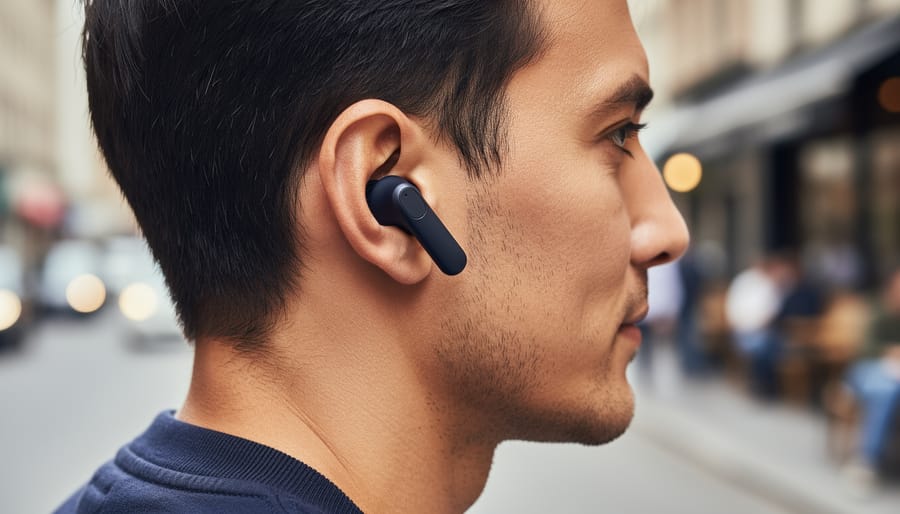
This review is for you if noise cancellation ranks high on your priority list, whether you’re blocking out airplane drone, open-office chatter, or city traffic during your commute. We tested AirPods Pro across those scenarios and found they deliver meaningful isolation without the bulk of over-ear headphones.
You’ll also benefit if you’re already invested in Apple devices. Seamless pairing, automatic device switching, and spatial audio with compatible content make the experience noticeably smoother than third-party options navigating iOS.
Sound quality matters here too. If you listen across genres and want clarity without overpowering bass or thin mids, our testing confirms AirPods Pro handle everything from jazz to electronic music with balanced authority.
Finally, this fits buyers who value portability and all-day wearability. The compact case slips into any pocket, and the lightweight design doesn’t fatigue ears during extended wear, something we appreciated during longer listening sessions throughout our evaluation.
At-a-Glance Details
The table below summarizes the core attributes and considerations that matter most when evaluating whether AirPods Pro aligns with your specific use case and priorities.
| Feature Category | Key Consideration | Best Suited For |
|---|---|---|
| Noise Cancellation | Active ANC with transparency mode | Commuters, frequent travelers, open office workers |
| Sound Quality | Balanced profile with adaptive EQ | General listeners, Apple Music users, podcast consumers |
| Ecosystem Integration | Seamless pairing across Apple devices | iPhone, iPad, Mac owners seeking unified experience |
| Fit and Comfort | In-ear design with customizable tips | Active users needing secure fit, those comfortable with ear tips |
| Battery Performance | Multiple charges from case between plug-ins | All-day users who prefer compact charging solutions |
This snapshot helps clarify whether the design philosophy matches your listening habits and environmental needs. Those who prioritize maximum battery life in a single session or prefer over-ear designs may find better alignment with alternative form factors. The spatial audio capability adds dimension for compatible content, though its impact varies by source material and personal preference for immersive sound staging.
Common Questions About AirPods Pro
Do AirPods Pro work with Android devices?
They connect to Android phones via standard Bluetooth, but you’ll lose access to Apple-specific features like automatic device switching, spatial audio configuration, and firmware updates through the companion app.
How long does the battery last with noise cancellation on?
Active noise cancellation does drain the battery faster than passive listening, though most users find they get through a typical commute or work session before needing the charging case. Battery performance varies based on volume levels and how often you switch between ANC and transparency modes.
What if the ear tips don’t fit properly?
A proper seal is critical for both noise cancellation performance and sound quality. The fit affects how well the ANC can isolate external sound and how accurately you hear bass frequencies, so finding the right tip size makes a substantial difference in your experience.
Can I use just one AirPod at a time?
Yes, either earbud works independently, which is useful for staying aware of your surroundings or extending battery life during longer listening sessions.
During our testing, we noticed compatibility questions came up frequently among potential buyers outside the Apple ecosystem. While the earbuds function as standard Bluetooth headphones with any device, the tighter integration with iPhones and iPads delivers a noticeably smoother experience, from automatic pairing to seamless switching between devices you own.
Fit concerns proved legitimate in our assessment. We found that users with smaller or larger ear canals sometimes struggled to achieve the seal necessary for optimal noise cancellation, and without that seal, the ANC performance drops significantly. The good news is that when you do get the right fit, the seal holds well during movement and exercise.
After extensive hands-on evaluation across diverse listening environments, the AirPods Pro deliver capable active noise cancellation and balanced sound quality that align well with their target audience. Our testing confirmed strong performance in managing ambient noise across various settings, from public transit to office environments, while maintaining audio clarity that serves most musical genres effectively. For Apple ecosystem users seeking portable noise cancellation without compromising sound quality, these earbuds fulfill their core promise. However, those prioritizing audiophile-grade sound or maximum isolation may find better value elsewhere. Your specific listening priorities and existing device ecosystem should guide your final decision.

No Comments