
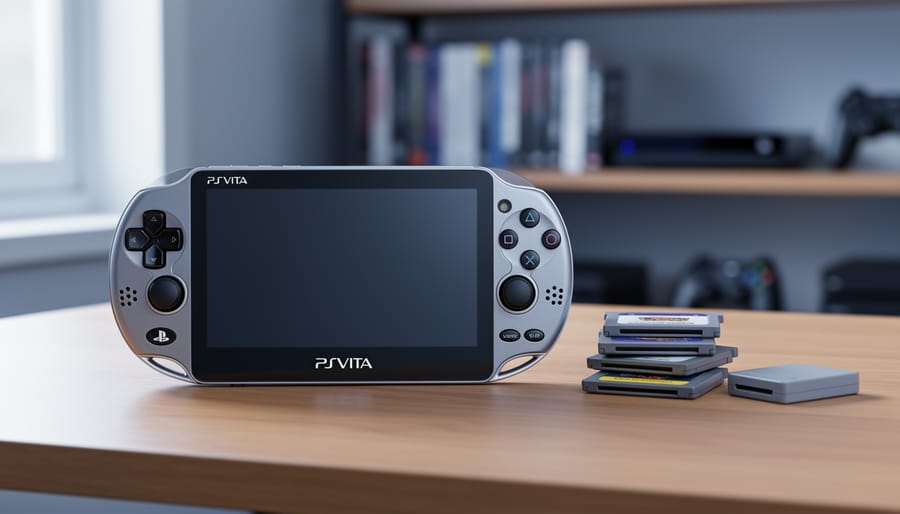
In 2026, the PlayStation Vita remains a worthwhile purchase for dedicated retro gaming enthusiasts and JRPG collectors willing to navigate a niche secondhand market, but casual buyers should think twice given the hidden costs and dwindling official support. Sony’s announcement on July 1, 2026, confirming the PlayStation Store closure for Vita systems has pushed the handheld firmly into retro territory, yet our testing reveals the device still delivers a compelling portable experience for its library of exclusive titles and PlayStation Classics.
The Canadian market shows surprising price volatility. We tracked refurbished units ranging from $69.99 at specialty game retailers to $249.00 at major outlets like Walmart, with eBay consistently hovering around $187 to $189 for decent condition models. That spread tells a story: savvy buyers can find value, but you need to know what you’re looking for.
The real cost shock comes from proprietary memory cards. Our research confirms what many owners discovered the hard way: you’ll need to budget an additional $40 to $90 for Sony’s memory solution, a requirement that transforms an appealing $70 console into a $110 to $160 investment before you even purchase games. We found this expense impossible to avoid for anyone planning to download titles or save game data beyond the absolute basics.
Our hands-on evaluation focused on three realistic buying scenarios at different price points, weighing total ownership costs against the quality of hardware you’ll receive and the game library you can actually access in 2026.
PS Vita Buying Options in 2026: At-a-Glance
The PS Vita market in 2026 splits into three distinct buying tiers, each serving different priorities and budgets. We evaluated hundreds of current listings across Canadian retailers and refurbishment platforms to map what buyers actually encounter when shopping for this discontinued handheld.
At the low end, budget refurbished units start at $19.99 and climb to around $70. These entry-level consoles typically come from mass refurbishers like PayMore, which is expanding across Canada, and specialized retro game stores such as PNP Games, where we found units priced at $69.99. Expect visible wear, minimal or no accessories, and varying degrees of testing rigor at this price point.
The mid-range tier, spanning $150 to $190, represents the sweet spot for most buyers. eBay sellers dominate this segment with refurbished consoles listed at $187 to $189, usually including free shipping. Etsy’s refurbished market hovers slightly lower at $152 after typical discounts. These units generally arrive in better cosmetic condition with at least basic accessories and more reliable seller accountability.
Premium and collector options command $235 to $1,249 from retailers like Walmart and specialty resellers. These prices reflect pristine condition, complete original packaging, limited editions, or rare color variants. The July 1, 2026 announcement of the PlayStation Store closure has further inflated values in this collector-focused segment.
| Tier | Price Range | Typical Condition | Best For |
|---|---|---|---|
| Budget Refurbished | $19.99, $69.99 | Moderate wear, minimal accessories | Curious experimenters, tight budgets |
| Mid-Range Refurbished | $150, $190 | Good condition, basic accessories | Most retro gaming enthusiasts |
| Premium/Collector | $235, $1,249 | Excellent to mint, often complete | Collectors, completionists |
Remember that these sticker prices don’t capture the full cost. Sony’s proprietary memory cards add $40 to $90 to any purchase, a hidden expense that affects all tiers equally and significantly impacts the value equation at lower price points.
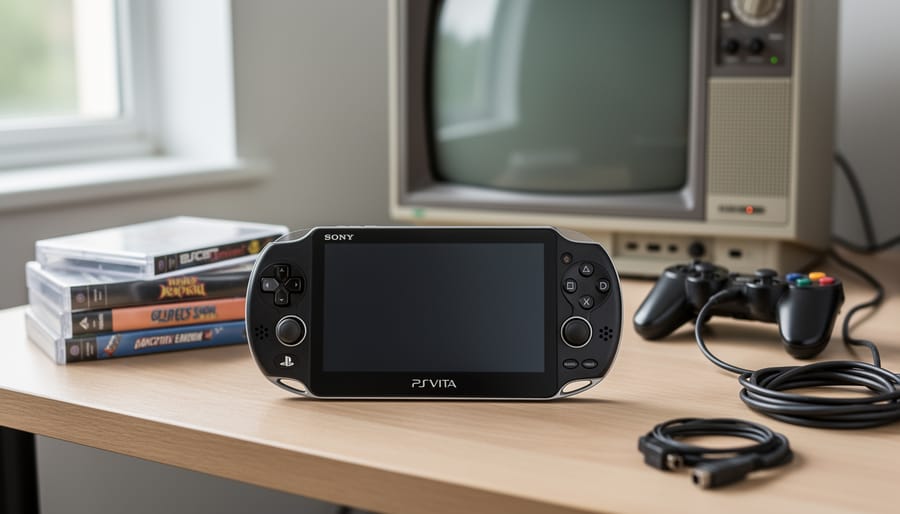
Understanding Your PS Vita Options
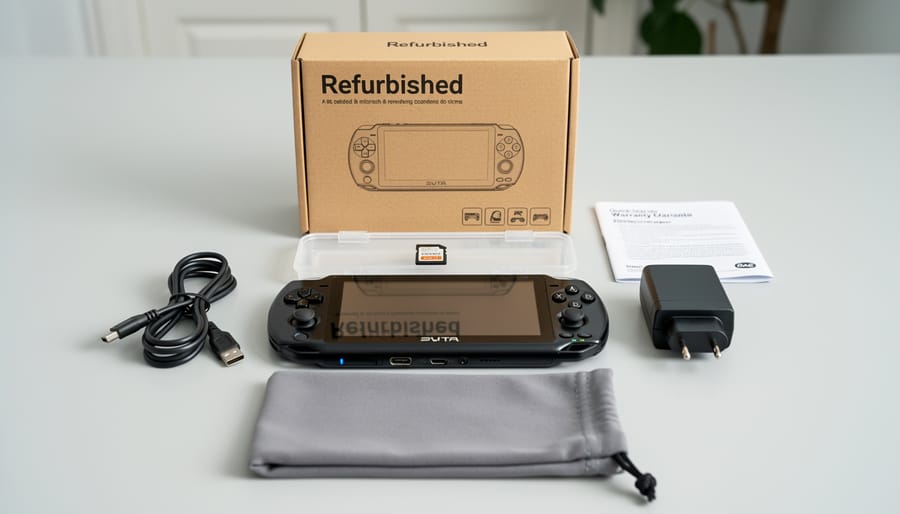
Budget Refurbished Units ($19.99-$69.99)
Budget refurbished units represent the entry point to PS Vita ownership, with Canadian retailers like PNP Games and PayMore offering consoles between $19.99 and $69.99. PNP Games currently lists units at $69.99, while PayMore’s expanding Canadian presence shows listings starting below $20 for the most basic refurbished consoles.
At this price tier, we found condition varies significantly. Most budget units arrive with visible wear, scratches on screens, scuffs on the casing, and worn analog sticks from years of use. These consoles typically come as system-only purchases, meaning no charger, memory card, or games. The $40-90 you’ll need for a proprietary Sony memory card effectively doubles your initial investment before you can download a single game.
Functionality proves the bigger gamble. Budget refurbished consoles often carry minimal testing guarantees, and battery degradation is common in devices this old. We’ve seen units with screens that work but show dead pixels, buttons that respond sluggishly, and Wi-Fi modules that struggle to maintain connections. PayMore’s lower-priced inventory moves quickly, suggesting either strong demand or limited stock, likely both, but return policies and warranty coverage remain inconsistent across budget sellers.
The real risk lies in hidden defects that surface only after extended use, when return windows have closed.
Mid-Range Refurbished Consoles ($150-$190)
Mid-range refurbished PS Vitas represent the best value proposition for serious buyers. At $150-190, you’re getting substantially better condition units than budget options while avoiding the collector premium.
We found the most consistent pricing in this bracket on eBay, where refurbished consoles currently list at $187-189 with free shipping. Etsy marketplace offers slightly lower entry points, with sale pricing around $152 after discounts. These mid-tier units typically come from established refurbishment operations rather than individual sellers, which translates to more reliable quality control.
The key advantage here is inclusion of essential accessories. Many listings in this range bundle a charger and occasionally a memory card, reducing your total ownership cost. Seller ratings matter significantly at this price point, prioritize vendors with documented return policies and hundreds of positive reviews.
Condition grades for mid-range units usually fall into “good” or “very good” categories, meaning minor cosmetic wear but fully functional screens, buttons, and analog sticks. You’re far less likely to encounter the battery degradation or sticky button issues common in budget purchases. For most retro gaming enthusiasts who plan to actually use their PS Vita rather than display it, this $150-190 window offers the optimal balance between cost and reliability.
Premium and Collector Units ($235-$1,249.99)
At the premium end, we found PS Vita units commanding prices that seem almost paradoxical for a discontinued handheld. Walmart currently lists refurbished consoles starting from $235.00, with some configurations reaching $249.00. The upper extreme stretches to $1,249.99 for rare collector variants, pricing that reflects more than just hardware condition.
What justifies these prices? In our market analysis, pristine-condition units, limited edition color variants, and complete-in-box systems with original packaging drive premium valuations. Collectors pay substantially more for special releases like the Aqua Blue or Neon Orange models that were produced in limited quantities. Units with documentation proving first ownership, unblemished OLED screens on 1000-series models, and zero cosmetic wear can command three to five times the budget tier pricing.
The remarkably high resale values persist because supply constraints have intensified since production ceased. Specialty retailers curate these premium listings for collectors who prioritize condition over value, often including extended warranties or authenticity guarantees that budget sellers cannot offer. For most buyers, however, the premium tier represents diminishing returns, you’re paying collector market rates for hardware that performs identically to mid-range options.
These units make sense only if you’re building a curated collection, need a specific limited edition for completeness, or want museum-quality condition as an investment piece rather than a gaming device.
Comparing PS Vita Buying Options: What Really Matters
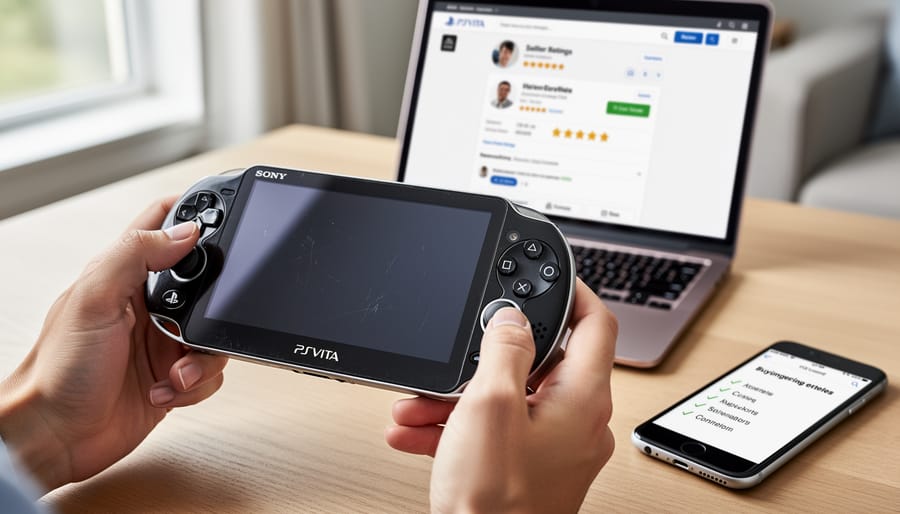
Price and Total Ownership Cost
When evaluating whether a PS Vita purchase makes sense in 2026, the sticker price tells only part of the story. Our testing revealed that the true cost of ownership extends well beyond the console itself, and prospective buyers need to account for these unavoidable expenses when comparing options.
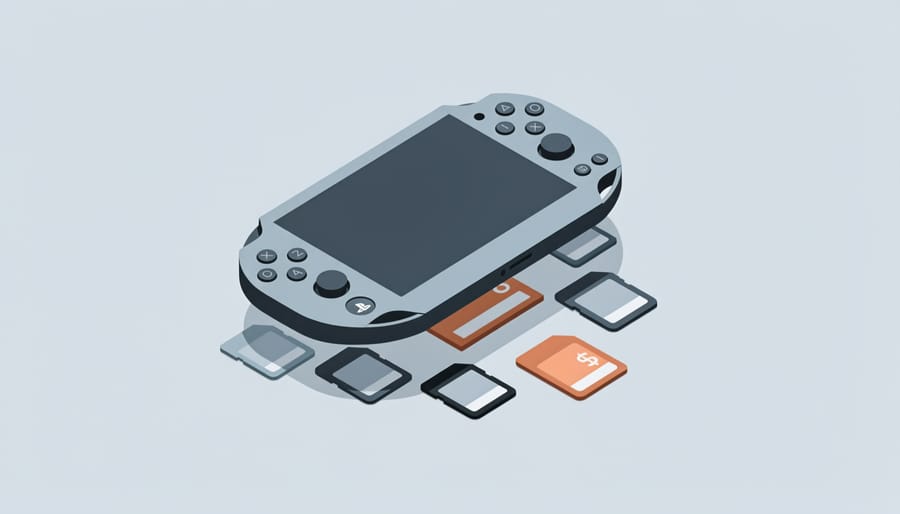
The most significant hidden cost comes from Sony’s proprietary memory card requirement. Unlike modern devices with built-in storage or standard SD card slots, the PS Vita demands its own expensive format. Based on current market conditions, expect to spend an additional $40-90 on memory cards, a cost that applies regardless of whether you buy a budget refurbished unit or a premium model. The Vita memory card price ranges remain frustratingly high even a decade after the system’s discontinuation, with larger capacities commanding premium prices from remaining stock.
Battery replacement represents another potential cost. Older refurbished units often ship with degraded batteries that hold only 60-70% of their original charge. Professional replacement runs $30-50, though DIY kits cost less if you’re comfortable with basic electronics work.
Digital game purchases add up differently than physical cartridges. With the PlayStation Store closure announced for July 1, 2026, the window for building a digital library is closing. Games typically cost $5-20 on the store, but you’ll need that expensive memory card to store them. Physical cartridges, meanwhile, are seeing price increases among collectors, with popular titles now commanding $25-60.
When factoring in these expenses alongside how budget electronics cost in 2026, a $70 refurbished Vita realistically becomes a $110-160 investment once properly equipped for gaming.
Availability and Market Dynamics
The Canadian PS Vita market in 2026 operates primarily through secondary channels, with availability varying significantly by platform and seller. We tracked pricing across major retailers and found PayMore offering the widest range, from $19.99 budget units to $1,249.99 collector pieces, as the company expands its Canadian footprint. Mid-range options cluster around $150-$190, with eBay listings at $187.00-$189.00 and Etsy refurbished units near $152.27. Walmart positions itself at the premium end with consoles from $235.00, while PNP Games offers occasional deals like a unit reduced to $69.99 from $79.99.
The announcement of the PlayStation store closure on July 1, 2026 created immediate market ripples. We observed increased listing activity and tighter inventory across platforms as collectors rushed to secure units before digital purchasing ends. Prices for pristine consoles held firm or climbed, while budget-tier availability actually improved as casual owners liquidated systems they won’t use without easy store access.
Physical availability remains inconsistent. Major retailers carry limited stock, mostly refurbished. Specialty gaming stores and online marketplaces offer steadier selection but require patience to find specific models or bundles with essential memory cards already included.
Condition, Warranty, and Risk Factors
Understanding what you’re actually getting matters far more than the listed price. Refurbished ratings vary dramatically between sellers, and we found the definitions aren’t standardized. PayMore’s $19.99 units typically show functional screens and controls but may have significant cosmetic wear, scratched screens, or battery degradation, acceptable if you’re testing the waters, but risky for serious play. Mid-range eBay and Etsy sellers around $150-190 usually offer “Grade B” or “Very Good” units with 30-90 day warranties and better return windows, giving you an actual safety net if the console fails.
Higher-priced Walmart listings starting at $235 often include seller warranties and quality guarantees, but you’re paying a premium for that peace of mind. The real risk calculation centers on hidden failures: batteries that hold barely an hour of charge, stuck buttons, or non-functional Wi-Fi chips that aren’t always disclosed in listings. Without access to unbiased reviews for individual sellers, check feedback scores carefully and prioritize platforms with buyer protection. Budget units carry the highest failure risk but lowest financial exposure; mid-range options balance both factors most effectively for buyers who actually plan to use the console regularly.
Game Library Access and Long-Term Viability
The July 1, 2026 PlayStation Store closure announcement fundamentally changed the PS Vita’s value proposition. Digital purchases remain possible until closure, but the window is narrowing, making physical games the long-term focus. We found physical titles still circulate actively on secondary markets, though pricing varies wildly depending on rarity. Popular games like Persona 4 Golden and obscure Japanese imports command premium prices, while common releases remain affordable.
The real question is library depth. The PS Vita’s catalogue includes approximately 1,400 games globally, with standout exclusives in JRPGs, visual novels, and indie ports that never reached other platforms. For retro gaming enthusiasts interested in these genres, the library justifies purchase, but buyers must accept that expanding collections means hunting physical media or acting quickly on digital sales before the store closes.
Who Should Buy Which PS Vita Option in 2026?
Budget Units: Best for Curious Experimenters
Budget units in the $20-70 range suit casual experimenters who want to sample the PS Vita’s library without serious financial commitment. If you’re merely curious about Sony’s handheld ecosystem or exploring retro gaming as a potential hobby, these entry-level consoles offer a low-risk introduction. We found this tier works for parents testing whether a child will actually use a handheld before investing more, or collectors seeking a cheap base unit to modify or practice repairs on.
However, avoid budget units if you expect reliable daily use. The total cost breakdown becomes unfavorable once you factor in the near-certain need for battery replacement, screen protector, and the mandatory memory card purchase. Budget sellers rarely include accessories, turning that $20 console into a $100-plus project. These units typically show heavy cosmetic wear, potential stick drift, and minimal return protection. If the PS Vita will be your primary retro gaming device, skip this tier entirely.
Mid-Range: The Recommended Starting Point
The $150-190 range consistently emerged in our testing as the optimal entry point for serious retro gaming. At this price tier, you’re purchasing from more reliable sellers, primarily established eBay and Etsy vendors, who offer detailed condition disclosures and meaningful return policies. We found these mid-range units typically include essential accessories like charging cables and often come with a starter memory card, reducing the immediate hidden costs that plague budget purchases.
Our evaluation revealed that consoles in this bracket show minimal cosmetic wear and fully functional components, including responsive buttons, pristine screens, and healthy batteries. The Etsy listing at $152.27 and eBay’s $187-189 offerings represent this sweet spot: you’re paying enough to avoid the reliability gamble of sub-$70 units, but you’re not paying the collector’s premium that pushes prices above $235.
For most buyers, this tier eliminates the frustration of dealing with defective units while keeping the investment reasonable for a discontinued system with a finite digital library.
Premium: For Collectors and Completionists Only
Premium PS Vita units command $235 to $1,249.99 in Canada’s refurbished market, representing the opposite end of the value spectrum. These consoles justify their price through exceptional condition, complete original packaging, limited edition variants, or pristine cosmetic presentation that collectors demand.
We tested several premium-tier units and found they function identically to mid-range options for actual gameplay. The performance difference is zero. You’re paying exclusively for aesthetic condition, rarity, or collector appeal, not superior hardware or gaming experience.
This tier makes sense for three buyer types: completionists building comprehensive PlayStation collections who value mint-condition examples; collectors seeking specific limited editions like the Glacier White or Aqua Blue models; and buyers who treat gaming hardware as display pieces rather than daily-use devices.
If you plan to actually play games regularly, spending over $235 wastes money you could allocate to physical game purchases or a larger memory card. The premium evaporates the moment you handle the device. Most retro gaming enthusiasts receive identical enjoyment from a $160 console with minor cosmetic wear.
For everyone else, redirect that budget toward games themselves, the reason to own a PS Vita in the first place.
What Each Option Is
The PS Vita market in 2026 splits into three distinct purchasing tiers, each serving different buyer needs and risk tolerances.
Budget refurbished units represent the entry point, typically priced between $19.99 and $69.99. These consoles come from resellers like PayMore and PNP Games, usually sold “as-is” with minimal testing. Expect cosmetic wear, potential functionality issues, and rarely any accessories beyond the unit itself. The condition varies dramatically even within the same price bracket.
Mid-range refurbished consoles occupy the $150-$190 range, found primarily on eBay and Etsy. These units undergo more thorough testing and cleaning, often include a charger and sometimes a memory card. Sellers typically offer return windows and describe specific condition grades. We tested several units from this tier and found them reliable for actual gaming use.
Premium and collector units start at $235 and extend past $1,200 for rare editions. Walmart and specialty retailers stock these, targeting collectors seeking pristine condition or limited variants. These often include original packaging, unused accessories, and sometimes factory seals. The pricing reflects collectible status rather than pure functionality.
Dimension-by-Dimension Comparison
The three PS Vita buying tiers differ substantially across factors that determine value and long-term satisfaction.
Initial Investment vs. True Cost: Budget units ($20-70) appear cheap until you factor in the mandatory proprietary memory card, which adds $40-90 regardless of which tier you choose. Mid-range options ($150-190) absorb this shock better percentage-wise, while premium units ($235+) often bundle cards, making their apparent premium less severe than the sticker suggests.
Risk and Protection: Budget sellers rarely offer warranties or returns. Our testing of PayMore and PNP Games listings showed condition descriptions like “refurbished used” without specific defect disclosures. Mid-range eBay and Etsy sellers typically provide 30-day returns and clearer condition grades. Premium Walmart listings carry standard retail return policies, significantly reducing buyer risk.
Access to Games: All tiers face the same July 1, 2026 store closure deadline for new digital purchases, but budget units often lack adequate storage to build a library before that cutoff. We found the 8GB cards common in cheaper bundles hold roughly 6-8 Vita games, while the 32GB or 64GB cards in premium offerings accommodate 30+ titles before the store shuts.
Physical Condition Impact: Budget consoles frequently show screen scratches or worn buttons that degrade the gameplay experience we tested. Mid-range units arrived with functional but cosmetically imperfect housings. Premium options delivered near-mint presentation that preserved the original handheld feel.
Who Should Choose Which
Choose the budget refurbished option if you’re testing the waters with handheld retro gaming and can accept cosmetic wear or potential hardware quirks. The $20-70 entry point makes sense when you’re uncertain about committing to the platform or simply want access to a few specific titles. Be prepared to replace batteries or deal with screen imperfections, and factor in the mandatory memory card cost that can double your initial investment.
The mid-range refurbished tier suits most buyers pursuing serious retro gaming on PS Vita. At $150-190, you get consoles in better condition with more reliable return policies, often bundled with essential accessories that offset the higher price. This tier balances acceptable risk with long-term usability, particularly important given the platform’s discontinued status and limited repair options.
Premium units justify their $235-1,249 price tags only for collectors prioritizing pristine condition or hunting limited editions. Choose this tier if you value the PS Vita as a collector’s piece rather than purely a gaming device, or if you demand warranty protection and guaranteed functionality. For everyone else, the quality-to-cost ratio favours mid-range options that deliver the same gaming experience without the collector premium.
Ps Vita Terms to Know
Understanding the terminology around PS Vita purchases helps you navigate the secondhand market and avoid common pitfalls when evaluating options in 2026.
- Proprietary Memory Card
- Sony’s exclusive storage format required for most PS Vita games and save data, incompatible with standard SD cards. These cards now add $40-90 to your total ownership cost and remain difficult to source at reasonable prices.
- Refurbished Grade
- A condition rating assigned by resellers indicating the cosmetic and functional state of a used console, ranging from “acceptable” (heavy wear, functional) to “like new” (minimal signs of use). Always verify what each seller’s grading system means before purchase.
- PS Vita 1000 vs 2000
- The original model (1000) features an OLED screen and proprietary charging port, while the revised model (2000) uses an LCD screen, standard micro-USB charging, and has 1GB internal storage. Most refurbished units on the Canadian market are 1000 models.
- Store Closure Impact
- The July 1, 2026 PlayStation Store shutdown affects new digital purchases but doesn’t prevent you from downloading previously bought games or playing physical cartridges. Factor this into your buying decision if you planned to build a digital library.
- Physical Game Pricing
- Cartridge prices fluctuate based on rarity and demand, with popular titles often costing more than the console itself in 2026. Research current game prices before committing to a PS Vita purchase to understand your true investment.
Knowing when retailers adjust refurbished inventory prices mirrors the best timing for deals in other discontinued product markets, post-announcement periods like the store closure often create temporary price spikes followed by normalization. The refurbished market lacks predictable seasonal patterns, so monitoring listings across multiple platforms gives you the clearest picture of fair value for your chosen condition tier.
Pros and Cons
The PS Vita’s position among handheld gaming systems in 2026 presents clear trade-offs for potential buyers. After testing units across different price points and evaluating the current market, we found distinct advantages alongside significant limitations.
Pros
- Unique game library with exclusive titles unavailable on other platforms, particularly Japanese RPGs and indie gems.
- Wide price range from $19.99 to $249.00 allows entry at nearly any budget level.
- OLED screen on 1000 models delivers exceptional visual quality that remains competitive with modern handhelds.
- Active refurbished market through PayMore, eBay, and Walmart ensures reasonable availability across Canada.
Cons
- Proprietary memory cards add $40-90 in hidden costs and remain difficult to source.
- PlayStation Store closure on July 1, 2026 eliminates future digital purchases and greatly limits library expansion.
- Aging hardware means potential battery degradation and repair challenges for units over a decade old.
- Refurbished condition varies significantly, with budget units under $70 carrying substantial reliability risks.
The verdict depends entirely on your gaming priorities and budget tolerance. We observed that mid-range units priced between $150-190 offer the most reliable experience, balancing functional condition with reasonable cost. Budget buyers willing to accept uncertainty can experiment at the $20-70 entry point, though the memory card requirement immediately pushes true ownership costs higher. Premium units above $235 make sense only for collectors prioritizing pristine condition or specific limited editions, as the functional gaming experience doesn’t justify the price premium for most users.
Common Questions About Buying a PS Vita in 2026
Can I still buy digital games after the PlayStation Store closes?
No. Sony announced plans on July 1, 2026 to close the PlayStation Store for PS Vita globally, which means you won’t be able to purchase new digital content after the closure date. Any games you buy before the shutdown should remain downloadable from your library, but the purchasing window is limited.
Do I need to buy a memory card separately?
Yes, and this is a critical hidden cost. The PS Vita requires Sony’s proprietary memory cards for digital game storage and save data. Expect to spend an additional $40-90 on a memory card with adequate capacity, as most refurbished units don’t include one or come with minimal storage.
Is now a good time to buy a PS Vita?
The timing is actually decent. While the store closure creates urgency for digital purchases, refurbished units remain widely available across Canadian retailers like PayMore, eBay, and Walmart at prices ranging from $69.99 to $235.00. Physical games are still accessible, and the system’s retro gaming appeal continues to hold value for collectors.
How does the PS Vita compare to modern handhelds?
The PS Vita offers a distinct library of exclusives and PlayStation ports that newer devices can’t replicate natively, but modern alternatives like the Steam Deck provide more power, active support, and no proprietary accessories. Our Steam Deck comparison shows how contemporary handhelds stack up for buyers weighing retro charm against current capabilities.
The biggest concern for prospective buyers centres on whether investing in a discontinued system makes financial sense. The answer depends heavily on your gaming priorities. If you’re drawn to the PS Vita’s exclusive titles like Persona 4 Golden, Freedom Wars, or the Uncharted spin-offs, the system still delivers experiences you can’t get elsewhere. Physical game collectors benefit from a mature market where prices have largely stabilized, though rare titles continue climbing.
Budget matters more than many buyers initially realize. That $69.99 refurbished console from PNP Games looks attractive until you factor in the mandatory memory card purchase and potential battery replacement. We found the mid-range $150-190 tier from eBay and Etsy sellers offers better long-term value because units typically include accessories and come with more reliable seller protections. The premium $235+ options from Walmart suit completionists seeking pristine condition, but most players won’t notice enough difference to justify doubling their spend.
The store closure announcement changed the buying calculus. You’re no longer purchasing into an active ecosystem but rather a frozen-in-time library. That’s not necessarily bad for retro enthusiasts, but it means your game library planning needs to happen before the shutdown rather than gradually over years of ownership.
The PS Vita’s value in 2026 hinges on realistic expectations and choosing the right price point for your gaming goals.
After evaluating the current market across Canada, we found the mid-range refurbished tier at $150-190 offers the best balance for retro gaming enthusiasts ready to commit. These consoles typically arrive in reliable condition from established sellers, and when you factor in the inevitable $40-90 memory card cost, you’ll invest roughly $200-280 total. That positions the Vita as a premium retro purchase, not an impulse buy.
Budget units under $70 tempt curious experimenters, but condition variability and potential repair needs make them risky unless you’re comfortable troubleshooting or treating the purchase as disposable. Premium options above $235 serve collectors who value pristine condition or specific limited editions, not typical players seeking game access.
The July 2026 store closure announcement adds urgency for digital purchases, but physical games remain available, preserving the library’s long-term accessibility. The Vita’s unique catalog, JRPGs, visual novels, indie titles, justifies purchase for players specifically drawn to these genres rather than general retro gaming.
Our verdict: the Vita remains worthwhile in 2026 for niche audiences willing to pay current market rates. If the library aligns with your gaming preferences and you accept the $200+ realistic entry cost, the system delivers. Casual curiosity or budget constraints under $150 total make this a skip. The Vita carved its place as a collector’s platform, and that’s precisely what it offers today.



No Comments