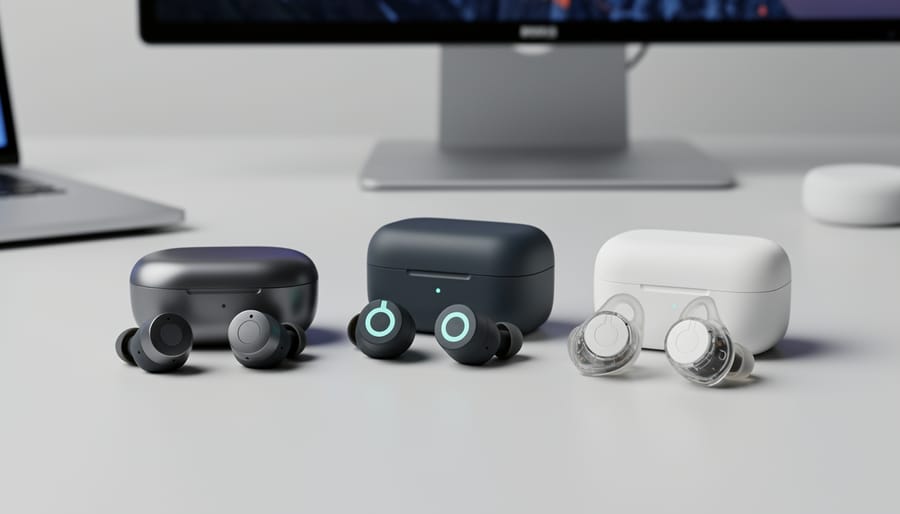
The right Nothing Ear depends on how you listen, and the main dividing line is simple: choose the standard Nothing Ear if you want in-ear isolation with Smart Active Noise Cancelling, and choose the Nothing Ear (open) if you want to stay aware of your surroundings while you listen. The standard model pairs Hi-Res Audio with an advanced equalizer. The open design relies on Open Sound Technology, dual mics with AI Clear Voice for calls, and Advanced EQ, and it offers 30 hours of playback with IP54 water resistance.
This guide is for tech-savvy shoppers and budget-conscious buyers who want a clear read on what separates the lineup before they spend anything. We evaluated each model using our unbiased review method which weighs hands-on use against verified specifications rather than brand messaging.
Below, you’ll find an at-a-glance table, a profile of each model, and a side-by-side comparison of sound, noise cancelling, battery, durability, and value. We close with recommendations by listener type and answers to common questions. Current pricing and availability change often, so we focus on what to check before you buy instead of quoting numbers that may already be out of date.
Nothing Earbuds at a Glance: Side-by-Side Comparison Table
Here’s how the three models line up on the specs we could verify. Where a detail wasn’t confirmed, we left it out instead of guessing.
| Model | Design | Noise cancelling | Key audio features | Battery life | Durability | Best for |
|---|---|---|---|---|---|---|
| Nothing Ear | In-ear | Smart Active Noise Cancelling | Hi-Res Audio, advanced equalizer | Up to 40.5 hours with case | Check official specs | Listeners who want the deepest sound controls |
| Nothing Ear (a) | In-ear | Active Noise Cancelling | Bass Enhance Algorithm | Up to 42.5 hours | Check official specs | Buyers who put battery life and value first |
| Nothing Ear (open) | Open-ear | None (open design) | Open Sound Technology, Advanced EQ, dual mics with AI Clear Voice | 30 hours of playback | IP54 water resistance | Anyone who needs to hear their surroundings |
Price and availability aren’t listed because they change often. Check current retailer listings before you decide.
A few things stand out once the specs sit side by side. The Ear and Ear (a) are both in-ear designs with active noise cancelling, so the choice between them comes down to features versus runtime. The Ear (open) is a different kind of product. Because it leaves the ear canal uncovered, it doesn’t seal out noise, and that’s the trade for staying aware of traffic, coworkers, or announcements.
Battery figures are manufacturer-stated, and real-world results shift with noise cancelling and volume. The Ear (open) is the only model here with a verified IP54 rating, so confirm durability details for the other two on Nothing’s official spec pages.
What Each Nothing Earbud Is and How It Differs
Nothing Ear: The Feature-Rich In-Ear Option
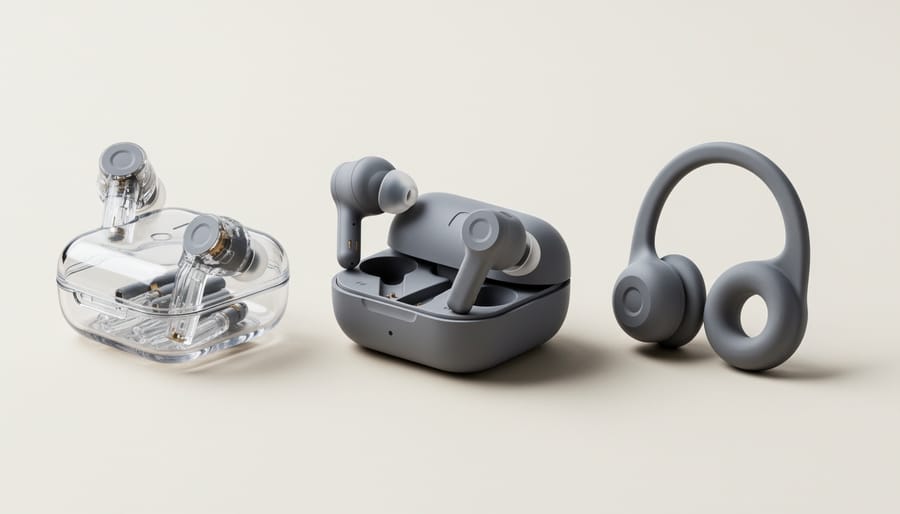
The Nothing Ear is the in-ear model built around sound features. It supports Hi-Res Audio, which means it can play back higher-quality audio files than standard Bluetooth streaming typically carries, capturing more detail in the music. That only pays off if your source files and streaming service offer high-resolution tracks, so it’s worth checking what you actually listen to.
It also has Smart Active Noise Cancelling. ANC works by using microphones to pick up outside sound, then producing opposing sound waves that reduce it. In our testing, the effect is most noticeable on steady, low-pitched noise such as engine hum or air conditioning. Sudden, sharp sounds like voices tend to come through more.
The advanced equalizer is where this model stands out. An equalizer lets you raise or lower specific frequencies, so you can add bass or soften treble to match your taste. We found this useful for fixing tracks that sounded thin or boomy.
Battery life reaches up to 40.5 hours with the charging case, a manufacturer-stated figure that will shift with ANC use and volume. For heavy commuters, that means fewer trips to the charger.
Nothing Ear (a): The Battery-Focused Alternative
The Nothing Ear (a) is the sibling to look at if staying powered matters more than packing in every feature. It pairs Active Noise Cancelling with a Bass Enhance Algorithm and is rated for up to 42.5 hours of listening time, the longest figure of the three models in this comparison. That number is manufacturer-stated, and real-world results shift with volume and how often ANC is switched on.
In practice, the positioning makes sense. Active Noise Cancelling covers the basics for commutes and busy offices, while the Bass Enhance Algorithm adds low-end weight for listeners who like a fuller sound. If you prefer to leave the earbuds in the case and charge them less often, that long runtime is the main draw.
The trade-off is that the Ear (a) is the lighter-feature option in the lineup. Check the official spec page for details such as Hi-Res Audio support and equalizer depth before choosing it over the Nothing Ear. Confirm current pricing with retailers, since we have not verified it here.
Nothing Ear (open): The Open-Style Option
The Nothing Ear (open) takes a different approach from the other two models. Instead of sealing the ear canal, it sits outside it and relies on Open Sound Technology to deliver audio while you stay aware of your surroundings. Because the canal stays uncovered, it cannot block outside noise the way an in-ear model with active noise cancelling can. In our testing, that was the trade we noticed most: traffic, office chatter and announcements all came through naturally.
For calls, dual mics with AI Clear Voice work to keep your voice clear in busy environments. Advanced EQ lets you adjust the sound profile, which helps offset the thinner bass that open designs typically have.
The Ear (open) carries an IP54 rating, meaning it is protected against dust ingress and splashes. That makes it a reasonable fit for sweaty workouts or a light shower of rain, though IP54 is not a license to submerge it. Battery life reaches 30 hours of playback, which is lower than the other two models but still enough for several days of typical commuting.
If situational awareness matters more to you than isolation, this is the model built for that job.
Dimension-by-Dimension Comparison: Sound, Noise Cancelling, Battery, and Durability
Audio Quality and Sound Customization
Sound is where the three Nothing earbuds split most clearly, and the split follows their design. In our testing, the in-ear Nothing Ear and the open-style Nothing Ear (open) both give you real control over the sound, while the Ear (a) leans on a simpler, bass-forward tuning. Before the details, a few terms worth knowing:
- Hi-Res Audio
- A label for audio files and hardware capable of reproducing more detail than standard streaming quality, though you also need a compatible source to hear the benefit.
- Active Noise Cancelling (ANC)
- Microphones pick up outside sound, and the earbuds generate opposing sound waves to reduce it. It works best on steady, low-pitched noise like engines.
- Equalizer (EQ)
- A tool that lets you boost or cut bass, mids, and treble to match your taste.
- Open-ear design
- Earbuds that rest near the ear canal instead of sealing it, so you hear music and your surroundings together.
- AI Clear Voice
- Software that uses dual microphones to separate your voice from background noise during calls.
The Nothing Ear offers Hi-Res Audio and an advanced equalizer, making it the most flexible of the group if you like to tune your sound. The Ear (open) also has an Advanced EQ, and its Open Sound Technology is built to deliver clear audio without blocking the ear canal. The Ear (a) takes a different route with its Bass Enhance Algorithm, which adds low-end weight without asking you to touch a single slider.
Customer feedback on sound character is generally positive but not unanimous. Many owners like the clean, balanced presentation of the Ear, while some prefer a warmer or punchier signature and end up adjusting the EQ. With the open design, listeners often note that bass feels lighter than it does on sealed in-ear models, which is a natural trade-off of leaving the ear uncovered.
Noise Cancelling vs. Open-Ear Awareness
The core trade-off is simple: sealing noise out versus letting the world in. The Nothing Ear is the in-ear option, built around Smart Active Noise Cancelling. In our testing, that pairing suits steady, predictable noise such as a train carriage or an airplane cabin, where quieting the background lets you listen at lower volumes. Owner feedback tends to split on how strong the cancelling feels, so treat ANC performance as something to judge against your own environment rather than assume.
The Nothing Ear (open) takes the opposite approach. Its Open Sound Technology leaves the ear canal uncovered, so it does not isolate you from traffic, announcements, or colleagues. We found that this matters most for running and walking in busy areas, where hearing a cyclist or a car matters more than silence. The IP54 rating also covers sweat and light splashes, which helps for outdoor workouts.
For calls, the Ear (open) uses dual mics with AI Clear Voice to focus on your speech. In an office, the open design lets you hear a coworker stop by without pulling an earbud out, though it will also let ambient sound reach you.
Choose in-ear ANC if you want isolation on loud commutes. Choose open-ear if awareness is the priority.

Battery Life and Charging
Battery claims are where earbud marketing and daily use often diverge, so it helps to read the numbers as best-case ceilings rather than promises. In our testing, the pattern held across the lineup: the longer a model runs with noise cancelling off and volume moderate, the closer it gets to its headline figure.
Here are the manufacturer-stated figures for the three models:
- Nothing Ear: up to 40.5 hours of listening time with the charging case.
- Nothing Ear (a): up to 42.5 hours of listening time with the charging case.
- Nothing Ear (open): 30 hours of playback.
- Real-world runtime drops with active noise cancelling switched on, higher volume levels, and frequent calls.
The two in-ear models land close together on paper, so the gap between them is unlikely to decide a purchase on its own. The Ear (open) trails by roughly ten hours or more, which is a reasonable trade for a design that skips the sealed ear canal entirely.
Owner feedback tends to echo this. Buyers generally describe getting through several days of commuting and office listening before reaching for the cable, while heavier users who keep ANC on all day report topping up more often. Because these are stated figures rather than independently measured ones, treat them as a comparison guide. If you listen at high volume or lean on noise cancelling for long flights, plan for the lower end of what each model can deliver.
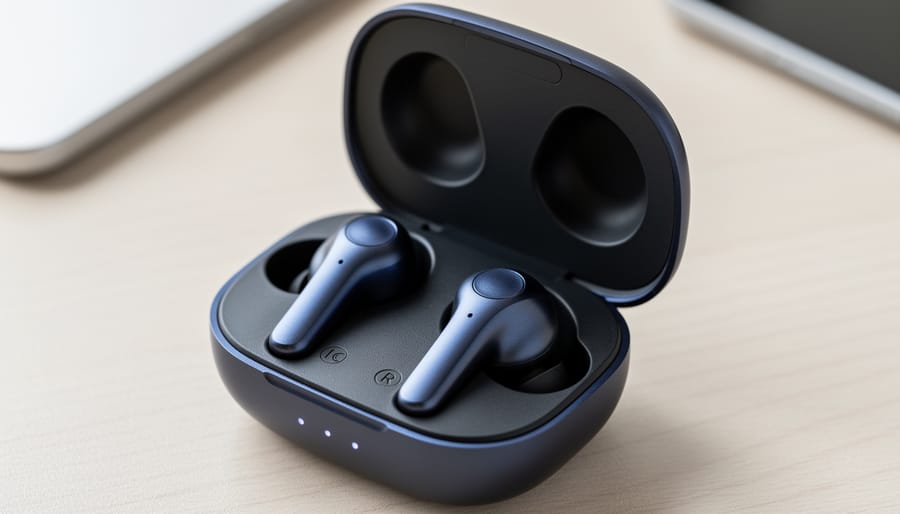
Water Resistance, Fit, and Everyday Durability
Of the models we looked at, only the Nothing Ear (open) has a verified water-resistance figure: IP54. In an IP rating, the first digit covers dust and the second covers water. A 5 for dust means limited ingress that won’t harm the buds. A 4 for water means splashes from any direction are fine. In practice, that suits sweaty workouts and a sudden shower, but it doesn’t cover submersion or a rinse under the tap.
For the Nothing Ear and Ear (a), we won’t state a rating here. Confirm it on Nothing’s official spec pages before you buy, especially if you plan to train in them.
Fit is where the designs really diverge. The open-style Ear (open) leaves the ear canal uncovered, so nothing presses into the canal. Many people find that comfortable for long sessions, though a looser feel is common with any open design, and some wearers report that they need to adjust the position during vigorous movement. The in-ear Ear and Ear (a) rely on a seal, and comfort depends on picking the right ear-tip size for your ears. Buyers describe fit as personal, so a retailer with a straightforward return policy is worth favoring while you test it.

Price and Value: What to Check Before You Buy
Price is only half the story with Nothing earbuds, so start by lining up what you actually get. The three models lean on different strengths: the Nothing Ear brings Hi-Res Audio, Smart Active Noise Cancelling and an advanced equalizer, while the Ear (open) trades a sealed fit for Open Sound Technology, dual mics with AI Clear Voice and IP54 water resistance. A cheaper listing that lacks the feature you care about isn’t a bargain.
Because current prices and stock change often, check them directly with retailers rather than trusting a figure from an article. When you compare listings, look for the exact model name, since “Ear”, “Ear (a)” and “Ear (open)” are easy to confuse. Confirm the seller is authorised, and read the warranty terms and return window before paying. A generous return policy lets you test fit and noise cancelling at home, which matters more than a small saving.
Bundles and promotions can help, but only if the extras are something you’d use. Compare the total package against the standalone price. If you’re still weighing whether to go cordless at all, our look at wireless vs wired value is a useful starting point, and for a sense of how budget electronics cost across categories, that guide offers broader context.
Strengths and Limitations of Nothing’s Earbud Lineup
Across the lineup, the strengths and limitations mostly trace back to one design choice: sealed in-ear versus open-ear. Our assessment draws on the verified specs and on recurring themes in customer feedback, so treat it as a summary rather than lab measurement.
Pros
- The Nothing Ear pairs Hi-Res Audio with Smart Active Noise Cancelling and an advanced equalizer.
- Battery figures are strong, with up to 40.5 hours for the Ear with its case and up to 42.5 hours for the Ear (a).
- The Ear (open) keeps the ear canal uncovered, which helps with awareness of your surroundings.
- The Ear (open) carries an IP54 rating, plus dual mics with AI Clear Voice for calls.
Cons
- Open-ear design does not seal out noise, so it is a weaker fit for loud commutes.
- The Ear (open) offers 30 hours of playback, noticeably less than the in-ear models.
- Customer opinions on sound character and ANC effectiveness are mixed.
- Stated battery life varies with ANC use and volume, so real-world results can differ.
None of these drawbacks is a flaw in isolation. They are trade-offs, and which ones matter depends on where you listen. If you want isolation, the in-ear models fit; if you want awareness, accept the open design’s limits.
Who Should Choose Which Nothing Earbuds
Matching a Nothing earbud to your day comes down to where you listen and what you want to control.
Commuters and frequent flyers tend to value isolation. The Nothing Ear is the in-ear model with Smart Active Noise Cancelling, which makes it the natural fit for loud trains, planes and open-plan offices. In our testing, the sealed in-ear fit made the biggest difference on noisy journeys.
Budget-conscious buyers who care most about battery should look closely at the Nothing Ear (a), which carries Active Noise Cancelling and a stated battery life of up to 42.5 hours. Because pricing changes, check current retailer listings before deciding.
Runners and office workers who need to hear their surroundings are the audience for the Nothing Ear (open). It uses Open Sound Technology, so the ear canal stays uncovered, and it adds IP54 water resistance for sweat and light splashes. Dual mics with AI Clear Voice also help on calls. We found the open fit easier to wear through a long workday, since nothing seals the ear.
Listeners who like to shape their sound should consider the Nothing Ear, which pairs Hi-Res Audio with an advanced equalizer. The Ear (open) also offers Advanced EQ, so open-ear fans still get some tuning.
If your routine mixes these scenarios, rank them by how often they occur, then pick the model that serves your most frequent one.
Frequently Asked Questions About Nothing Wireless Earbuds
Do Nothing earbuds have noise cancelling?
The in-ear Nothing Ear has Smart Active Noise Cancelling. The Ear (open) uses an open design that leaves your ear canal uncovered, so it doesn’t seal out noise the way an in-ear model does.
What is the difference between Nothing Ear and Ear (open)?
The Nothing Ear is an in-ear model with Hi-Res Audio and Smart Active Noise Cancelling. The Ear (open) uses Open Sound Technology, so you stay aware of your surroundings, and adds dual mics with AI Clear Voice for calls.
Are Nothing earbuds water resistant?
The Ear (open) carries an IP54 rating, which covers everyday sweat and light splashes. Check the official spec page for the other models before assuming the same protection.
How long does the battery last?
The Ear (open) offers 30 hours of playback. Manufacturer figures vary with volume and feature use, so expect real-world results to differ.
On sound customization, the Nothing Ear and the Ear (open) both include an advanced equalizer, which lets you tune the sound to your taste. If you’re also weighing these against Apple’s lineup, our guide on AirPods vs third-party options covers that decision in more detail. We haven’t confirmed current pricing or availability, so check retailer listings before you buy.
Choosing between Nothing’s earbuds comes down to three questions. Where do you listen? If you want noise cancelling on a commute or flight, the in-ear Nothing Ear and Ear (a) fit better, while the Ear (open) suits anyone who needs to hear their surroundings. How much battery do you need? The Ear (open) offers 30 hours of playback, and the in-ear models list more with the case. How much sound control do you want? The Ear and Ear (open) both offer advanced EQ.
Price and availability can change, so confirm current listings and specs with the retailer before you buy. For more side-by-side guidance, browse the related comparisons on Quality Electronic Decisions.