
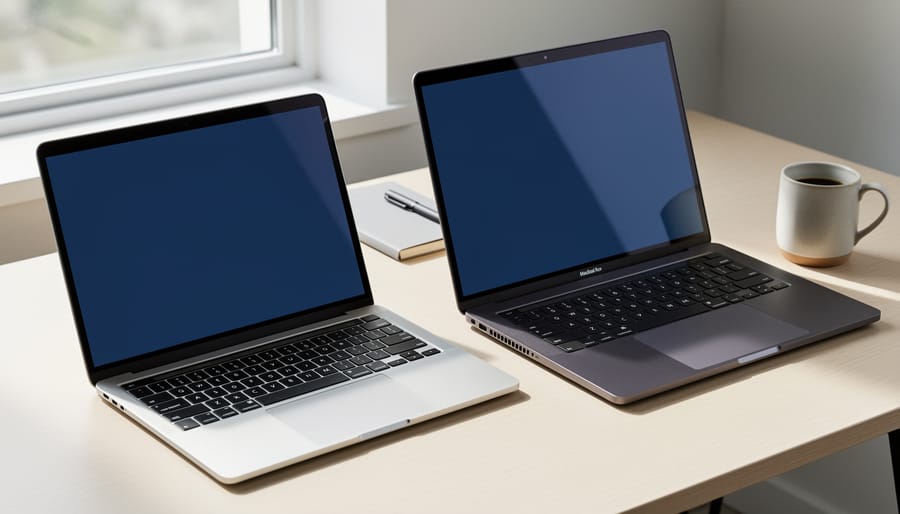
CNET’s budget laptop recommendations for 2026 range from $699 for the MacBook Neo, its top overall pick, to approximately $1,500 for the Surface Laptop 7, its best Windows option. Understanding budget electronics costs helps buyers navigate these price tiers, which span from true entry-level Windows machines under $500 to premium budget devices pushing the upper boundary of affordability. The latest CNET roundup, updated July 31, 2026, confirms that platform choice (Windows versus macOS), processor generation, RAM configuration, and storage capacity drive most of the variation in pricing.
Buyers who rely on unbiased reviews from established tech publications can compare these validated price points against competing models and refurbished alternatives. CNET’s picks include inexpensive Windows laptops, affordable MacBooks, and a Copilot Plus PC, demonstrating that “budget” no longer means compromising on essential performance. The MacBook Neo’s $699 price tag positions it as the best under-$700 laptop available right now, while the Acer Aspire Go 16 serves as CNET’s new Windows top pick for cost-conscious shoppers. This introduction lays the groundwork for exploring what drives these costs, which features justify higher spending, and how to identify the best value within your specific budget range.
Budget Laptop Price Ranges for 2026
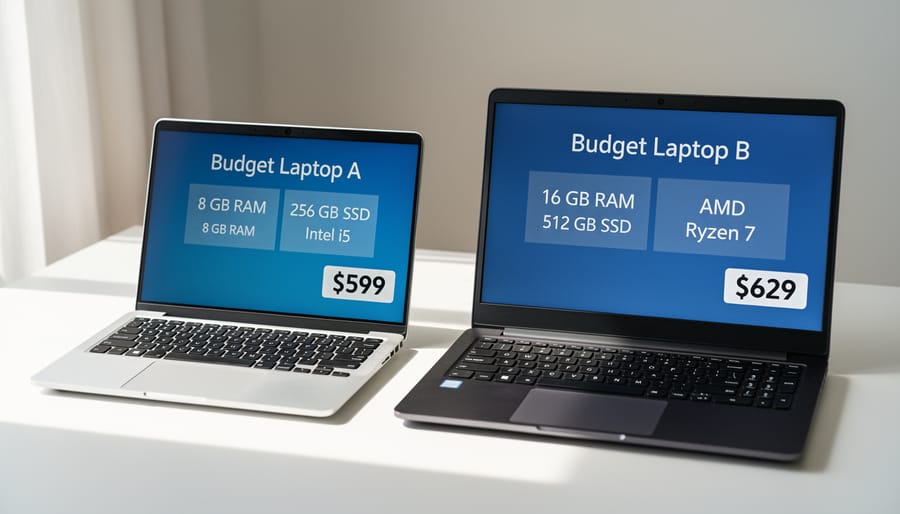
Under $700 Options
The under-$700 tier represents the most accessible entry point for budget laptop buyers in 2026, and CNET’s testing reveals you don’t have to sacrifice quality at this price. The MacBook Neo stands out as the clear winner, priced at $699 directly from Apple. CNET ranks it as both the best overall budget laptop and the best option in this price bracket, a rare achievement for a machine at this cost.
What sets the MacBook Neo apart is the value it delivers relative to its price. You’re getting Apple’s build quality, ecosystem integration, and reliability for less than you’d pay for many mid-range Windows machines. CNET’s evaluation focused on real-world performance rather than just specifications, and the MacBook Neo earned top marks for handling everyday tasks without lag or compromise.
Other options exist in this tier, but CNET’s testing process in July 2026 confirmed what many budget shoppers suspected: spending right up to the $700 threshold yields significantly better results than buying the cheapest laptop available. The gap between a $699 machine and a $400 one isn’t linear, you gain disproportionate improvements in longevity, responsiveness, and overall experience as you approach this ceiling.
Windows Budget Models
Windows budget laptops in 2026 span a wider price spectrum than their Mac counterparts, offering more variety for different wallet sizes. Entry-level Windows machines typically start around $300 to $500, appealing to users who need basic productivity tools without frills. These bare-bones models often sacrifice build quality and performance for affordability, making them suitable for light web browsing, document editing, and streaming.
CNET’s new Windows top pick, the Acer Aspire Go 16 (AG16-71P-505H), represents the sweet spot in this category. It delivers solid performance and features at a price point that balances cost with capability, though CNET doesn’t specify its exact retail price in the July 2026 update. This model targets buyers who want more power and reliability than bottom-tier options provide without stepping up to premium territory.
The price gap between entry-level Windows laptops and CNET’s best budget Windows laptop is significant. The Surface Laptop 7, selling for roughly $1,500 at Amazon, costs three to five times what the cheapest Windows machines demand. That premium buys you superior build materials, better display quality, faster processors, and longer software support, positioning it at the high end of what most shoppers still consider budget-friendly.
Premium Budget Category
At the upper end of the budget spectrum sits the Surface Laptop 7, which CNET identifies as the best budget Windows laptop despite its roughly $1,500 price tag at Amazon. This positions it well above the sub-$700 tier dominated by the MacBook Neo, raising an important question: what makes a $1,500 machine a “budget” option?
The premium budget category targets users who need more than basic computing power but aren’t willing to pay flagship prices that often exceed $2,000. These laptops typically justify their cost through meaningful hardware upgrades rather than cosmetic flourishes. You’re paying for components that deliver tangible performance gains, faster processors that handle multitasking without slowdowns, higher RAM configurations that keep more applications responsive simultaneously, and superior display panels with better color accuracy and brightness for content work.
Build quality separates this tier from cheaper models. Premium budget laptops feature aluminum or magnesium chassis instead of plastic, better keyboards with improved key travel, larger trackpads with precision glass surfaces, and thermal systems that maintain performance under sustained load. The Surface Laptop 7’s price reflects Microsoft’s design investment alongside Copilot Plus PC capabilities that bring AI-enhanced features to the budget segment.
This category makes sense for professionals who need reliability for daily work, students handling demanding coursework, or anyone whose budget laptop serves as their primary computer. You’re not buying unnecessary luxury; you’re investing in longevity and capability that cheaper models can’t match.
What You’re Paying For: Budget Laptop Cost Breakdown
When you’re evaluating a budget laptop, your money gets distributed across several core components, each contributing to the device’s overall capability and longevity. Understanding this budget cost breakdown helps you identify where manufacturers cut corners and where they invest to deliver value.
The processor represents the single largest cost driver in any laptop. Budget models typically use entry-level chips like Intel Core i3 or AMD Ryzen 3 processors, which handle everyday tasks adequately but lack the multi-core performance of premium alternatives. At the $699 price point where the MacBook Neo sits, you’ll find capable processors that balance efficiency with cost.
RAM and storage eat up the second-largest chunk of your budget. Most sub-$700 laptops ship with 8GB of RAM and 256GB SSDs, a configuration that keeps prices down while maintaining usability for basic productivity work. The difference between a $500 laptop and one at $700 often comes down to doubling the storage from 128GB to 256GB or upgrading from 4GB to 8GB of RAM.
Display quality varies dramatically across price tiers. Budget laptops generally use 1080p IPS panels with standard brightness levels around 250-300 nits. You won’t get the high refresh rates, color accuracy, or brightness of premium displays, but modern budget screens are serviceable for most users. The physical size matters too; larger panels like the 16-inch screen on the Acer Aspire Go 16 add material costs.
| Component | Under $500 | Under $700 | $1,000-$1,500 |
|---|---|---|---|
| Processor | Celeron/Ryzen 3 | Core i3/Ryzen 5 | Core i5/Ryzen 7 |
| RAM | 4GB | 8GB | 16GB |
| Storage | 128GB eMMC | 256GB SSD | 512GB+ SSD |
| Display | 720p/1080p TN | 1080p IPS | 1080p+ high-brightness IPS |
| Build Materials | All plastic | Plastic with metal accents | Aluminum chassis |
Build materials and chassis design account for more cost variation than most buyers realize. Plastic housings keep prices low, while metal construction adds both expense and durability. The Surface Laptop 7 at roughly $1,500 exemplifies this premium budget approach with aluminum construction that justifies part of its higher price tag.
Operating system licensing also factors into the final cost, though its impact is relatively minor. Windows OEM licenses run manufacturers roughly $50-$80 per unit, a cost baked into the retail price of every Windows laptop. MacBooks avoid this separate licensing cost since Apple controls both hardware and software.
Factors That Impact Budget Laptop Prices
Component and Manufacturing Costs
Component prices directly shape what you pay at checkout. In 2026, RAM remains one of the most volatile costs. When manufacturers face a jump in memory prices, they absorb part of the increase but pass the rest to consumers, often bumping a laptop from $599 to $699 or higher. Storage pricing follows a similar pattern: NAND flash costs fluctuate with supply chain constraints and demand spikes, which is why identical models sometimes carry different price tags months apart.
The MacBook Neo at $699 illustrates how component selection keeps retail prices low. Apple spec’d it with just enough RAM and SSD capacity to meet budget targets without cutting corners on the processor or display. When a manufacturer chooses slower memory or smaller storage to hit a price point, the savings land on the sticker. Conversely, the Surface Laptop 7 at roughly $1,500 uses higher-tier components, faster RAM modules, more storage, a better screen, which explains the gap.
Manufacturing economies of scale matter, too. High-volume models like the Acer Aspire Go 16 benefit from bulk component orders and streamlined assembly lines, lowering per-unit costs. Smaller production runs or custom configurations push prices up, even within the budget category. Exchange rates, tariffs, and shipping also nibble at margins, occasionally forcing price adjustments mid-cycle.
Market Availability and Model Lifecycle
Budget laptop availability shifts constantly as manufacturers phase out older models to make room for new releases. When a laptop reaches the end of its product cycle, typically after 12 to 18 months, retailers clear remaining inventory through discounts, then discontinue the model entirely. This creates temporary bargains but also means the cheapest options you see today might vanish within weeks.
Product refresh cycles directly impact pricing in two ways. First, newly launched models command premium prices at release, pushing them above true budget thresholds until competitors respond or the manufacturer adjusts. Second, the discontinuation of older, cheaper alternatives forces budget shoppers into newer, often pricier tiers. CNET’s July 2026 update naming the Acer Aspire Go 16 as its new Windows top pick illustrates this churn, yesterday’s recommended model gets replaced, and buyers must evaluate fresh options at current market prices rather than relying on outdated advice.
Buying New vs. Refurbished: Cost Trade-Offs
Choosing between a new budget laptop like the MacBook Neo at $699 and a refurbished or older model ultimately comes down to balancing upfront savings against long-term reliability and support.
New budget laptops ship with full manufacturer warranties, typically one year of coverage that protects against defects and hardware failures. You get the latest processors, current operating system support, and guaranteed compatibility with new software for several years. The total cost of ownership remains predictable because you’re starting with zero wear on components like the battery, keyboard, and trackpad. New devices also qualify for extended warranty purchases and often include free trial subscriptions to productivity software.
Refurbished laptops and previous-generation models cost 20 to 40 percent less than new equivalents, but that discount carries trade-offs. Certified refurbished units from manufacturers include limited warranties (usually 90 days to one year), while third-party refurbs may offer only 30-day coverage or none at all. Battery health varies significantly in refurbished machines, and you might face reduced capacity from day one. Older models run fine for basic tasks but receive fewer years of operating system updates and security patches, potentially requiring replacement sooner than a new machine would.
Pros
- New laptops include full manufacturer warranties and guaranteed support for software updates.
- Refurbished models deliver immediate savings of 20 to 40 percent off comparable new prices.
- New devices start with zero component wear and predictable long-term costs.
- Certified refurbished units from manufacturers undergo testing and often include limited warranties.
Cons
- Refurbished laptops may have degraded battery health and shorter remaining lifespan.
- Older models receive fewer years of operating system and security updates.
- Third-party refurbished units sometimes lack any warranty protection.
- New budget laptops cost more upfront despite offering better long-term value.
The refurbished route makes sense if you need a temporary machine, have technical skills to handle minor repairs yourself, or prioritize lowest upfront cost above all else. Buying new pays off for anyone who needs reliable daily performance for three to five years, values warranty protection, or lacks experience troubleshooting hardware issues. Given that CNET’s top budget picks like the MacBook Neo already sit at $699, the refurbished discount shrinks when you’re starting from an affordable baseline rather than a premium-priced laptop.
Platform-Specific Budget Options
Budget MacBooks
Apple’s MacBook Neo stands out as the rare budget option in the Mac lineup, priced at $699 and earning CNET’s top overall budget laptop ranking for 2026. At this price point, you get genuine macOS integration, access to Apple’s ecosystem features like seamless continuity with iPhones and iPads, and the same software experience found on machines costing twice as much. The Neo delivers the fundamental Mac experience without premium materials or the latest M-series chip, but it runs current macOS releases and handles everyday tasks smoothly.
What sets the MacBook Neo apart from pricier Mac options is its intentional trade-offs. You sacrifice high-end display technology, advanced processing power for intensive creative work, and premium build quality, but you keep the core ecosystem advantages. For buyers who want the AirPods vs earbuds debate and iCloud syncing without paying MacBook Air or Pro prices, the $699 entry point makes it possible to join the Apple platform affordably.
Budget Windows Laptops
Windows buyers have more flexibility in the budget segment than Mac shoppers, with prices spanning from entry-level to premium budget models. The Surface Laptop 7 stands out as CNET’s best budget Windows laptop, though its roughly $1,500 price tag at Amazon places it at the upper end of what most consider budget territory. This higher cost reflects its Copilot Plus capabilities and more powerful components compared to true entry-level machines.
For those seeking a more accessible Windows option, CNET now highlights the Acer Aspire Go 16 (AG16-71P-505H) as its new Windows top pick. While specific pricing wasn’t detailed in CNET’s July 2026 update, this model represents the sweet spot for buyers who want Windows functionality without stretching to the Surface Laptop 7’s tier. The Aspire Go 16 offers a larger display and represents what you can realistically expect when shopping for an inexpensive Windows laptop that balances cost with everyday performance.
Copilot Plus PCs in the Budget Range
CNET’s July 2026 roundup mentions a cheap Copilot Plus PC among its budget picks, representing Microsoft’s AI-enhanced platform at an accessible price point. Copilot Plus machines integrate neural processing units (NPUs) that handle AI tasks locally, features like real-time translation, intelligent noise cancellation during calls, and context-aware productivity suggestions, without draining battery or relying on cloud processing. In the budget segment, these laptops deliver meaningful AI capabilities that improve everyday workflows, from automatically organizing files to enhancing video quality during meetings, justifying their inclusion when buyers want future-ready features without stepping into premium territory.
How to Minimize Your Budget Laptop Costs

Smart shoppers can slash hundreds off their budget laptop purchase without sacrificing the features that matter. The difference between paying full price and finding a deal often comes down to timing, flexibility, and knowing which corners to cut.
Strategic Timing and Deal-Hunting
Major sales events offer the steepest discounts. Back-to-school promotions in July and August, Black Friday in November, and January clearance sales routinely drop prices 15-30% on budget models. Tax season refund periods also trigger retailer promotions. Set price alerts on models you’re considering so you’ll know when they hit your target price.
Open-box and refurbished units from reputable retailers can save $100-300. Manufacturer refurbished laptops typically include warranties comparable to new units, while store open-box items usually qualify for return periods. Check whether the model was simply returned unopened or actually used, and inspect the warranty coverage carefully.
Maximizing Value Through Smart Trade-Offs
- Skip extended warranties on laptops under $700. Manufacturer coverage handles most first-year issues, and the warranty cost represents 10-15% of the purchase price.
- Choose last year’s processor. A 2025 chip performs nearly identically to a 2026 version for typical tasks but costs significantly less as retailers clear inventory.
- Buy the base RAM configuration and upgrade yourself if needed. Pre-installed RAM upgrades carry hefty markups compared to DIY installation on models with accessible memory slots.
- Accept a smaller SSD. Cloud storage and external drives cost less per gigabyte than factory storage upgrades.
- Compromise on display resolution. A 1080p screen handles everyday work perfectly well and saves $50-150 versus higher-resolution panels.
Student discounts through education stores can knock an additional 5-10% off models like the MacBook Neo, which already sits at $699. Similarly, employee purchase programs, credit card rewards, and cashback portals stack with sale prices to drive costs down further without compromising on the laptop itself.
DIY vs Hiring a Pro
When buying a budget laptop, you’re almost always purchasing a complete system rather than hiring someone to assemble or configure one for you. Unlike desktop PCs where custom builds make sense, budget laptops come pre-assembled from the manufacturer. The “DIY” aspect here means researching and selecting the right model yourself, while “hiring a pro” typically refers to paying a consultant or tech advisor to recommend options, or purchasing through a full-service retailer that provides setup assistance.
Doing your own research costs nothing beyond your time. You can compare CNET’s picks, read reviews, and make an informed choice in a few hours. The risk is selecting a model that doesn’t match your needs, but returns policies generally protect you. Hiring a consultant might run $50 to $150 for personalized advice, which rarely makes sense when the laptop itself costs $699 to $1,500. Most budget buyers can confidently choose between the MacBook Neo, Surface Laptop 7, or Acer Aspire Go 16 without professional guidance, especially since these models already represent expert-vetted choices. Save professional consultation fees for other tech investments like budget ANC earbuds or complete home office setups where integration complexity justifies the cost.
Key Details to Know
Understanding the budget laptop market in 2026 requires knowing a few critical details that can shape your purchase decision and help you avoid common pitfalls:
- CNET’s budget picks span a wide range: the MacBook Neo starts at $699 while the Surface Laptop 7 reaches $1,500, showing that “budget” depends on platform and features rather than a single threshold.
- RAM and storage prices have risen recently, meaning older budget models with similar specs often cost less than their 2026 replacements despite being functionally equivalent for basic tasks.
- The under-$700 category now includes Apple products, not just Windows machines, which shifts the value equation for buyers who previously assumed Macs were out of reach.
- Budget Windows laptops and Copilot Plus PCs occupy different price tiers, with AI-enhanced models commanding premiums that may not translate to practical benefits for everyday users.
- Manufacturer refresh cycles matter: models released mid-year or earlier often see steep discounts when successors launch, making timing your purchase as important as choosing the right spec sheet.
- Warranty coverage varies significantly in the budget segment, with some brands offering one year and others extending to two or three, affecting long-term ownership costs.
These factors interact in ways that make simple price comparisons misleading. A $900 laptop with premium build quality and extended support can cost less over three years than a $600 model that fails after eighteen months and carries expensive repair fees. The key is matching the price tier to your actual usage patterns rather than chasing the lowest sticker price.
Common Questions About Budget Laptop Pricing
Budget laptops raise a lot of questions, especially when prices span from under $700 to $1,500. Here are answers to the most common concerns about purchasing in this category.
What’s the cheapest reliable laptop you can buy?
The MacBook Neo at $699 currently holds CNET’s top spot as the best budget laptop overall and the best under-$700 option. For Windows users, the Acer Aspire Go 16 serves as CNET’s new top pick in the affordable segment, though prices vary by configuration.
Are budget laptops actually worth buying?
Yes, if you match the laptop to your actual needs. Budget models handle everyday tasks like web browsing, document editing, video streaming, and light photo work without issue. They fall short only when you demand intensive gaming, professional video editing, or specialized creative software that requires more processing power.
How long will a budget laptop last?
Expect three to five years of useful life from a quality budget laptop with proper care. The limiting factor is usually outdated components rather than hardware failure, processors and RAM that were adequate at purchase may struggle with future software updates and heavier applications as operating systems evolve.
What justifies the price gap between a $700 and $1,500 budget laptop?
The jump from $699 (MacBook Neo) to roughly $1,500 (Surface Laptop 7) buys you better build quality, longer battery life, improved displays, faster processors, and more RAM and storage. Premium budget models also include features like touchscreens, higher-resolution panels, and aluminum construction instead of plastic.
Hidden costs rarely surprise budget laptop buyers, but you should factor in potential expenses beyond the sticker price. Most budget models come with adequate warranties, though extended coverage adds $50 to $150 depending on the plan. Accessories like mice, laptop bags, and external storage aren’t always necessary but can add another $30 to $100 to your total outlay.
The biggest mistake is buying more laptop than you need or skimping so much that the device frustrates you daily. Identify your actual use cases, email, streaming, schoolwork, casual gaming, and match those requirements to the specs and price tier that supports them without overspending on capabilities you won’t use.
The budget laptop market in 2026 delivers solid performance and build quality at accessible price points, with CNET’s latest recommendations proving you don’t need to spend over $1,000 for a capable machine. The MacBook Neo at $699 stands out as the best overall value, offering Apple’s ecosystem and build quality at an entry-level price that undercuts many Windows competitors. For Windows users, the Acer Aspire Go 16 provides a compelling alternative in the same price range, while the Surface Laptop 7 at roughly $1,500 represents the upper boundary of budget territory for those seeking premium features without flagship pricing.
Your ideal budget tier depends on what you’ll actually use. Basic web browsing, document work, and streaming fit comfortably in the under-$700 range. Light creative work or multitasking pushes you toward the $900-$1,200 middle tier, where RAM and storage upgrades make a noticeable difference. The premium budget category around $1,500 makes sense only if you need specific features like superior displays or AI capabilities that cheaper models can’t deliver. Focus on the specs that match your workload rather than stretching your budget for features you won’t use.



No Comments