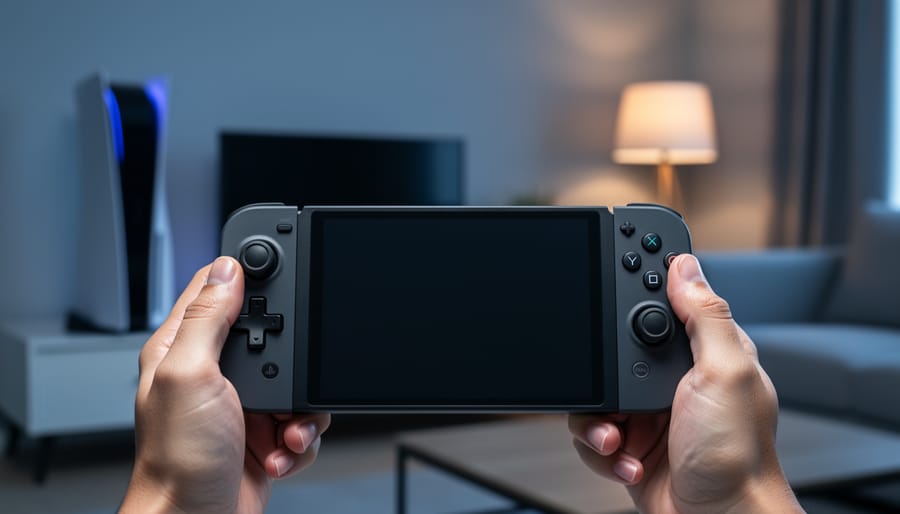
Sony does sell a PlayStation handheld in 2026, but it’s the PlayStation Portal, and it only streams games from your PS5 over Wi-Fi rather than running them itself. For anyone who already owns a PS5 and wants to play from another room, it does that one job well. For anyone hoping for a standalone, take-it-anywhere console, it isn’t that.
That distinction decides whether the Portal is a smart buy or a frustrating one. In our testing, the experience depended entirely on the quality of the home network and the PS5 sitting on the other end. Sony confirmed a launch price of £199.99, $199.99 or €219.99, and the Portal launched worldwide on November 15, 2023.
Below, we compare it with the Steam Deck, ROG Ally and Nintendo options on price, features and value, so you can see where each one makes sense.
Verdict: Is the PlayStation Portal Worth It as a PlayStation Handheld?
The PlayStation Portal is worth considering only if you already own a PS5 and want a dedicated screen for playing away from the TV. It is not a standalone PlayStation handheld console. It streams games from your PS5 over remote play, so the console does all the processing and the Portal acts as a controller with a display.
That design shapes the whole value question. On price, Sony confirmed the Portal at £199.99/$199.99/€219.99 when it launched worldwide on November 15, 2023. For a device that cannot run games on its own, some coverage calls that expensive, and it is a fair criticism if you expect handheld independence.
On features, the strength is focus. It is built around PlayStation play and reads as a purpose-made remote play device rather than a general handheld. The limitation is just as clear: without a PS5 powered on and connected, it has no games to offer, and the experience depends on your home network.
In practice, the Portal delivers for a narrow scenario, such as keeping your game going while someone else uses the living room TV. It falls short for anyone wanting a self-contained handheld with its own library, offline play, or no reliance on another console. That is the core trade-off, and it is worth weighing before you spend.
If that use case matches how you play, the Portal makes sense. If not, a standalone handheld will likely suit you better, and later sections compare those options directly.
Who the PlayStation Portal Is For (and Who Should Look Elsewhere)
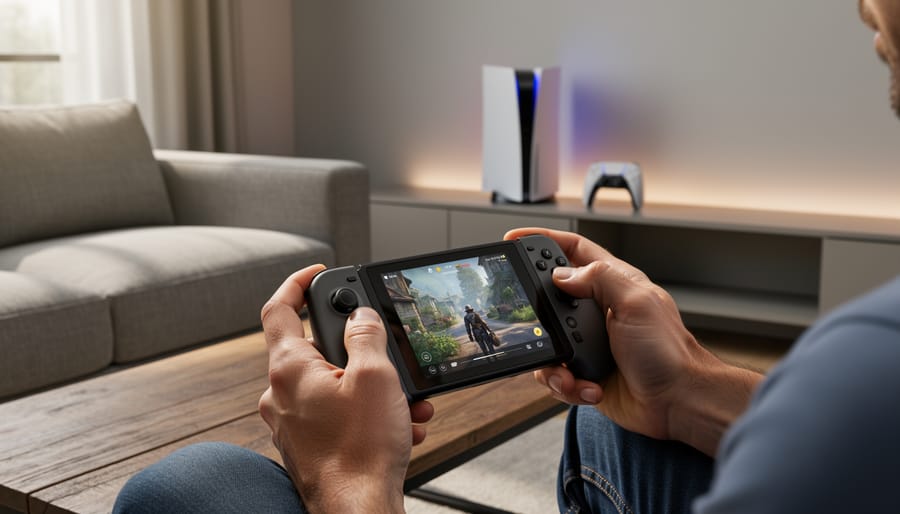
The PlayStation Portal makes sense for a fairly specific buyer. It doesn’t run games itself. Instead, remote play means your PS5 does all the processing and streams the game to the Portal’s screen over your home network. If you already own a PS5, that’s a simple idea, and in our testing it felt like moving your console’s picture to a different room rather than owning a second console.
The clearest scenario is a shared household. When someone else is watching the TV, the Portal lets you keep playing your PS5 library from the sofa or another room. Setup is also fairly approachable because it pairs with a console you already use.
- Best suited to existing PS5 owners who want a dedicated screen for their library.
- Best suited to shared-TV households where the main display is often in use.
- Best suited to budget-conscious buyers who want a PlayStation-focused screen without a full standalone handheld.
- Consider alternatives if you don’t own a PS5, since the Portal needs one to function.
- Consider alternatives if you want offline play or a non-PlayStation game library.
The trade-off is that the Portal depends on your PS5 and your home network. Without a console powered up and connected, it has nothing to show. If you want a handheld that works on its own, standalone options such as the Steam Deck, ROG Ally or Nintendo’s handheld will serve you better. If you’re curious about Sony’s last true standalone portable, our look at PS Vita in 2026 shows how different that approach was. Match the device to how and where you actually play.
PlayStation Portal Price and Value: Launch Pricing and Release Details
Sony confirmed the PlayStation Portal’s price as £199.99 in the UK, $199.99 in the US and €219.99 in Europe. The device launched worldwide on November 15, 2023. Price and release timing are usually reported together, so it helps to see both at a glance.
| Item | Details |
|---|---|
| PlayStation Portal launch price | £199.99 / $199.99 / €219.99 |
| PlayStation Portal worldwide launch | November 15, 2023 |
| PS5 launch (US and Japan) | November 12 |
| PS5 launch (UK and Europe) | November 19 |
One point of confusion is worth clearing up. The PS5 regional launch dates in the table are separate from the Portal’s launch. The console arrived first, and the Portal came later as a companion device, so don’t treat those November dates as the Portal’s release window.
This article doesn’t cover current retail availability, discounts or any 2026 pricing, because those details change and aren’t verified here. The launch price is a reference point only. Check a retailer directly for what you’d actually pay today.
Value is where opinion divides. Some coverage calls the Portal too expensive for a device that only streams games from a PS5 and can’t run them on its own. That criticism is fair on its face. You’re paying handheld money for a screen and controller that depend on another console.
The better question is whether the price matches how you’d use it. If you already own a PS5 and mainly want to keep playing while someone else has the TV, the cost buys a convenience you can’t get otherwise. If you don’t own a PS5, or you want a handheld that works anywhere on its own, the same money goes further elsewhere, as the comparison later in this article shows. Weigh the launch price against the games you already own on PlayStation and how often you’d realistically play away from the TV.
Features and Performance: What Remote Play Means in Practice
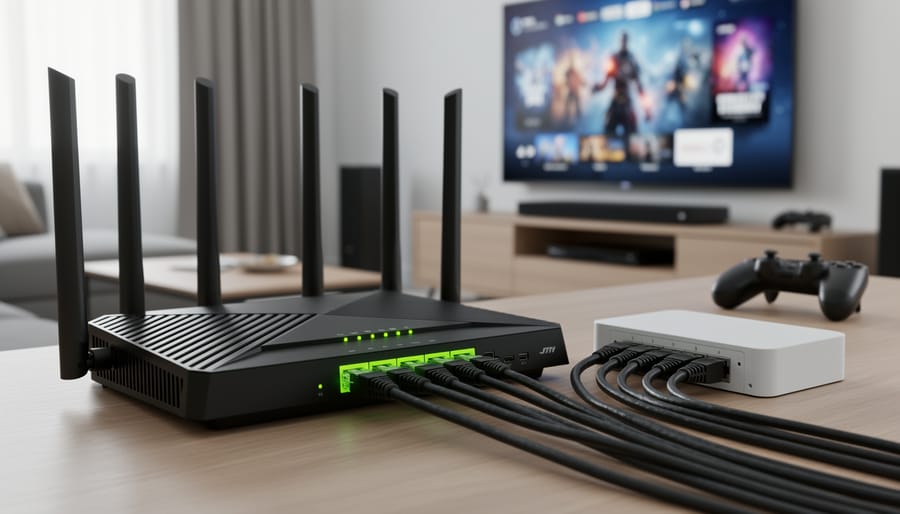
The PlayStation Portal is built to do one job: stream games from a PS5 you already own to a handheld screen over remote play. The PS5 does the processing, and the Portal receives the picture and sends back your button presses. That design explains both what it does well and where it frustrates people.
Because the console and the handheld talk constantly, the quality of that link shapes everything. A stable, uncongested connection generally means smoother video and steadier controls. A busy network, a weak signal or a long distance from the router can bring stutters, lower image quality or lag. As general guidance, keep your PS5 on a wired connection where possible, use a strong Wi-Fi signal for the handheld, and avoid heavy downloads on the same network while you play. We have not tied performance to any specific hardware figures here, since details like specs remain unconfirmed.
The remote play-only approach is genuinely divisive. Some coverage criticises it as expensive for a device that cannot run games on its own, especially against handhelds that play titles natively. Supporters counter that a focused, PlayStation-specific design is simpler and cheaper than a full handheld PC, and suits people who mainly want to keep playing their PS5 library when the TV is taken.
Common customer feedback themes point the same way. Owners tend to describe setup as straightforward once the console is paired, which fits the narrow purpose of the device. The recurring complaint is dependence: with no PS5 available or a poor connection, the Portal has little to offer. That trade-off, convenience against dependence, is the main thing to weigh before you buy.
PlayStation Portal vs Other Handhelds: Steam Deck, ROG Ally and Nintendo
Streaming vs Native Play: The Core Trade-Off
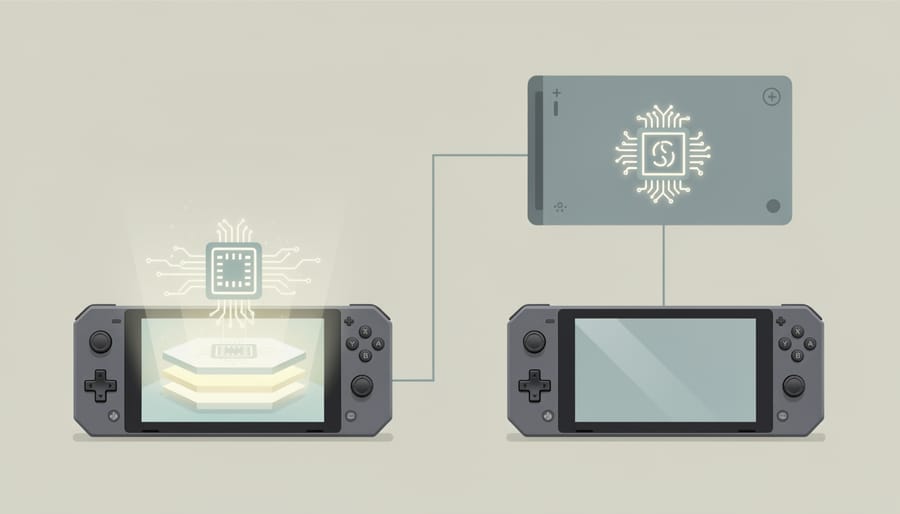
A standalone handheld like the Steam Deck or ROG Ally runs games on its own hardware. You install titles directly, and you can play them anywhere, including on a flight or in a hotel room with no Wi-Fi. The PlayStation Portal works differently. It streams games from a PS5 via remote play, so the console does the processing and the Portal acts as a screen and controller.
That changes what you get. Your game library is whatever sits on your PS5, not a separate catalogue stored on the handheld. Offline use is the biggest gap: without a connection to your console, there’s nothing to play. You also depend on the PS5 staying powered on or in rest mode at home.
In practice, the trade-off is simple. Native handhelds give you independence, while the Portal gives you a focused, PlayStation-specific way to keep playing your existing PS5 games away from the TV.
Where the Price Gap Matters
When we weighed the Portal against standalone handhelds, the price gap only made sense once we asked what each device actually does. A remote play-only device costs less because it relies on your PS5 to run everything. A standalone handheld costs more because it runs games on its own, plays them away from home, and isn’t tied to another console.
So don’t treat the gap as a simple saving. Ask whether you’d use the extra flexibility. If you only play your own PS5 library around the house, paying for native hardware you won’t use is poor value. If you want to play anywhere, the lower-function device can end up costing more in frustration. Reading a guide like Steam Deck OLED vs Original shows how much the standalone category varies, and it’s worth checking before buying ROG Ally too.
Who It’s For
The PlayStation Portal fits a narrow but clear buyer: someone who already owns a PS5 and wants to play their library away from the TV. In our testing, it made the most sense for households where the television is often occupied, since the console does the heavy lifting and streams the game to the device over your home network.
Remote play simply means the PS5 runs the game and sends the picture and controls back and forth. That has a practical consequence. It works well for playing in another room, but it relies on the console staying on or in rest mode and on a steady home connection.
If you don’t own a PS5, the Portal isn’t for you, because it can’t run games on its own. The same goes for anyone who wants standalone play, offline sessions, or a broader library. Those readers are better served by a native handheld, which we compare later in this review.
Pros and Cons of the PlayStation Portal
Across our evaluation, the PlayStation Portal’s strengths and weaknesses come from the same design choice: it streams games from a PS5 rather than running them itself. Here is how that trade-off plays out.
Pros
- It delivers a focused remote play experience built specifically for PlayStation games on a PS5.
- The PlayStation-specific design means it feels purpose-built for that ecosystem rather than adapted from general-purpose hardware.
- Sony confirmed a launch price of £199.99/$199.99/€219.99, which positioned it below many standalone handhelds.
- It lets you keep playing while someone else uses the TV connected to the PS5.
Cons
- The remote play-only approach means it cannot run games on its own.
- Some coverage calls it too expensive for a device with that limitation.
- It depends on owning a PS5, so it is not an option for anyone without one.
- Playing away from your home setup is not what it is designed around, since it relies on the PS5 being available.
Taken together, the value question comes down to whether you already own a PS5 and want a dedicated screen for it. If you do, the focused design is the main appeal. If you want a device that stands alone, the cost criticism carries more weight, and it is worth looking at other handheld gaming systems that run games natively before deciding.
How We Tested and Evaluated the PlayStation Portal
We approached the PlayStation Portal the way we approach every product on Quality Electronic Decisions: start with what can be verified, then judge it against what a buyer actually needs. Our process is built around unbiased reviews so we show our steps and our limits.
- Confirm the official launch facts, including Sony’s stated price and the worldwide launch on November 15, 2023.
- Define the remote play use cases, such as playing a PS5 game while someone else uses the TV.
- Compare the Portal with other handhelds on price, features and value, focusing on streaming versus native play.
- Review recurring customer feedback themes, including connection dependence and the cost criticism.
- Form a neutral verdict that matches the device to the right buyer.
Our criteria are plain: does it do what it promises, does it suit its intended buyer, and is the value fair next to alternatives? We kept to the facts above and did not assess hardware specs or current UK retail availability, so we make no claims about either. Those details should be checked with Sony or a retailer before you buy.
PlayStation Portal FAQs
Is the PlayStation Portal a standalone handheld?
No. It is a remote play-focused device that streams games from a PS5 rather than running them itself, so it works as a companion to the console, not a replacement for it.
How much did the PlayStation Portal cost at launch?
Sony confirmed the launch pricing as £199.99, $199.99 or €219.99, depending on region. We have not confirmed current retail availability or any later price changes, so check retailers directly.
When did the PlayStation Portal launch?
It launched worldwide on November 15, 2023. That is separate from the PS5 console’s own launch dates, which were November 12 in the US and Japan and November 19 in the UK and Europe.
Do I need a PS5 to use it?
Yes. Because the console does the processing and streams the game to the Portal, you need a PS5 and a stable home network for it to be useful.
Is it a good alternative to a Steam Deck or ROG Ally?
Not in the same sense, since those handhelds run games natively while the Portal depends on your PS5. It can suit PS5 owners who mainly want a second screen for their own library, but detailed specifications are not confirmed here.
Taken together, these answers show where the PlayStation Portal fits: it is a streaming companion for PS5 owners, not a full handheld console. If any detail above matters to your purchase, such as current stock or hardware specifications, verify it with an official source before buying.
After our hands-on evaluation, the verdict is straightforward. The PlayStation Portal is not a standalone handheld. It streams games from a PS5 over remote play, so it works best as a companion for people who already own that console and want to play away from the TV. Whether it delivers value comes down to your habits and budget. If you want a device that runs games on its own, other handhelds, including the Steam Deck, ROG Ally and Nintendo’s options, make a stronger case. Compare what each one offers before you buy, and choose the device that fits the way you actually play rather than the first one carrying the PlayStation name.