In the interest of transparency, we earn a commission on some purchases made through links on this site. As an Amazon Associate I earn from qualifying purchases.
Premium wireless earbuds earn their higher tier through four things: sound quality, active noise cancellation (ANC, which uses microphones to cancel ambient noise), battery life, and fit. Weigh those against your main use, whether that’s commuting, workouts, calls, or long flights, and the choice narrows quickly. Models such as the Bose QuietComfort Ultra Bluetooth Earbuds and the Sennheiser MOMENTUM True Wireless 5 Bluetooth Earbuds sit at the top of this category. Anker’s Soundcore range, including the Anker Soundcore P40i the Anker soundcore P30i and the Soundcore Sport X20 by Anker covers lower-cost and sport-focused territory, so the field is wider than the label “premium” suggests.
Not every buyer needs the top tier. If you’re still weighing the basics, our guide on Are wireless earbuds worth it compares sound, battery life, and value against wired headphones.
Below, we define the key buying factors in plain terms, compare the main earbud types, and give each of eight models its own neutral section based on verified ratings and listing features. We close with use-case recommendations, common mistakes, and an FAQ. We don’t quote prices or warranty terms, since those change often and aren’t confirmed here.
Key Buying Factors for Premium Wireless Earbuds
Sound, Noise Cancelling, and Call Quality
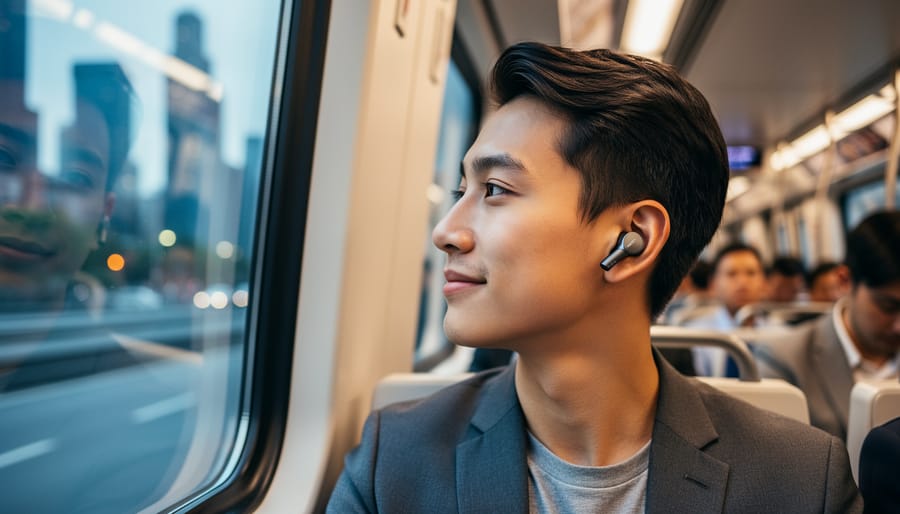
Active noise cancelling (ANC) uses microphones to pick up outside sound and generates an opposing signal to reduce it. It tends to work best on steady, low-pitched noise like engine hum or train rumble, which is why it matters for commuting and travel. Sudden sounds, such as voices or announcements, usually get through. If you want the mechanics, How ANC works covers it in more depth.
Adaptive ANC goes a step further by adjusting the level of cancelling as the surrounding noise changes, so the earbuds respond as you move from a quiet street to a busy platform. Results vary by model and by how well the earbuds seal in your ears.
Drivers are the tiny speakers inside each earbud. A larger driver, such as 10 mm or 12 mm, is often linked to fuller bass, but tuning matters as much as size, so treat the number as one clue rather than a guarantee of quality.
For calls, microphone processing refers to the software that filters wind and background noise from your voice. It helps in busy places, though no earbuds remove all noise.
Battery Life, Water Resistance, and Fit
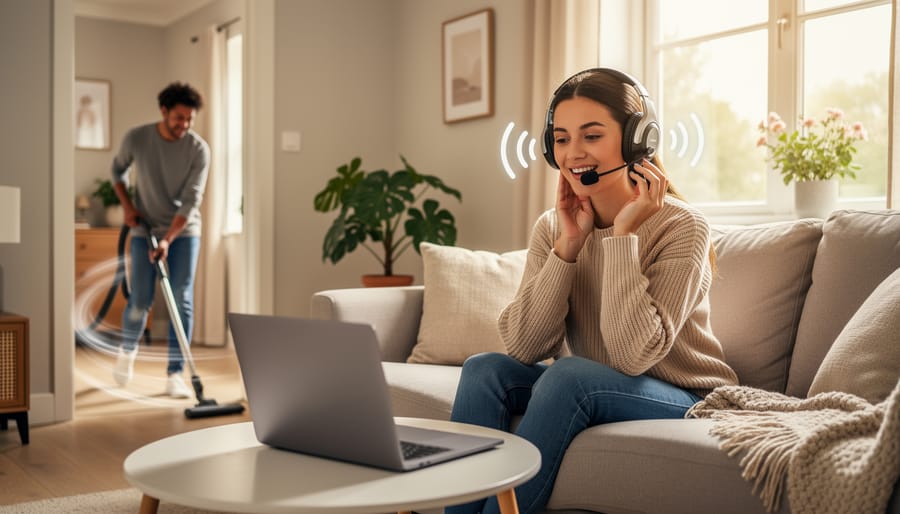
Battery claims usually come in two numbers, and they measure different things. The first is playback time from the earbuds alone on a single charge. The second adds the charging case, which recharges the buds several times over. A listing that says “40 hours” typically combines both, so check how many hours the earbuds themselves last before they need to return to the case. That figure matters most for long flights or workdays.
Water resistance is expressed as an IP rating. IPX4 means protection against splashes, which covers light sweat and drizzle but not heavy exposure. IP55 adds a degree of dust protection and resistance to low-pressure water jets. IP68 indicates dust-tight construction and protection against continuous immersion, which suits demanding workouts. The “X” simply means dust protection wasn’t tested.
Fit affects both comfort and stability. Small in-ear tips seal well for noise isolation but can fatigue some ears over long sessions. Ear hooks and wings hold earbuds steady during running, while open-ear clip designs reduce pressure but let more outside sound in. Choose the style you can wear comfortably for hours.

Types Compared: ANC In-Ear, Sport Hook, and Open-Ear Earbuds

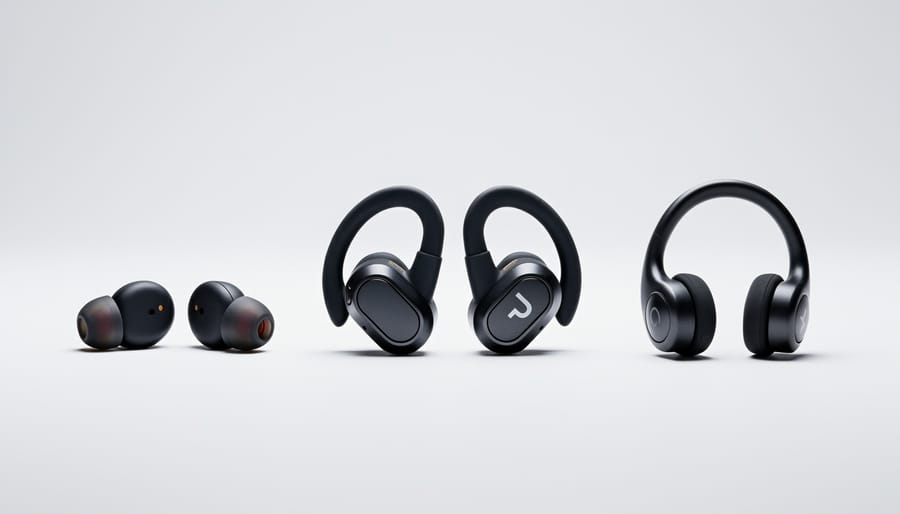
Premium wireless earbuds fall into three broad designs, and each one makes a different trade-off between isolation, fit security, and awareness of your surroundings. The grouping below follows the listing descriptions of the eight models in this guide.
| Earbud type | Best for | Main trade-off | Example models |
|---|---|---|---|
| ANC in-ear | Commuting, travel, and focused listening | Less awareness of traffic and announcements | Anker soundcore P30i, Anker Soundcore P40i, Sennheiser MOMENTUM True Wireless 5, Bose QuietComfort Ultra, JBL Tune Beam 2 |
| Sport hook | Workouts and active use | Hooks add bulk and take time to adjust | Soundcore Sport X20 |
| Open-ear clip-on | Situational awareness and long wear | Less isolation from outside noise | Soundcore C50i |
Noise-cancelling in-ear models seal the ear canal and use active noise cancelling (ANC) to reduce steady background sound such as engine hum. They suit people who want quiet on trains, planes, or in busy offices. The cost is reduced awareness, so you may hear less of what is happening around you. Several models in this guide also advertise adaptive noise cancelling, which adjusts to your surroundings.
Sport earbuds with ear hooks, like the Soundcore Sport X20, add a hook that loops over the ear. That extra anchor helps keep them in place during running, lifting, or other movement. If you train hard, this fit style deserves more weight than a slim profile.
Open-ear clip-on designs, such as the Soundcore C50i, rest outside the ear canal rather than sealing it. You can hear traffic, colleagues, or announcements while listening. Because nothing blocks the canal, they provide little isolation, so loud environments can drown out your audio.
Choose the type that matches your main use first, then compare battery, resistance ratings, and comfort within that group.
Premium Wireless Earbuds at a Glance: Ratings and Features Compared
Here’s how the eight models compare using listing data gathered during research. Ratings reflect what was shown at that time and can change, so treat them as a snapshot. Price, launch date, and warranty details are not covered here, so check those with the retailer before buying.
| Model | Rating (out of 5) | Customer ratings | Listed features |
|---|---|---|---|
| Anker soundcore P30i | 4.3 | 46,466 | Adaptive noise cancelling |
| Sennheiser MOMENTUM True Wireless 5 | 4.2 | 302 | ANC, 40-hour battery claim |
| Soundcore C50i by Anker | 4.4 | 3,556 | Open-ear clip-on, IP55, Bluetooth 6.0 |
| Soundcore Sport X20 by Anker | 4.1 | 16,952 | Ear hooks, IP68, 48-hour claim, noise cancelling |
| Soundcore Anker P20i | 4.3 | 118,492 | 10 mm drivers, bass emphasis |
| Anker Soundcore P40i | 4.4 | 18,207 | Adaptive noise cancelling |
| Bose QuietComfort Ultra | 4.0 | 3,667 | Noise cancelling, immersive audio, IPX4, up to 6 hours |
| JBL Tune Beam 2 | 4.4 | 3,509 | True wireless noise cancelling |
A few patterns stand out. The Soundcore P20i has by far the largest rating count, which gives its average more statistical weight than the Sennheiser’s 302 ratings. The Sport X20 pairs the highest listed resistance rating here (IP68) with a hook-style fit, while the Bose lists the shortest battery claim of the group.
Fit style shapes a lot of these choices. If you’re unsure whether a clip-on design suits you, our guide on Open-ear vs in-ear explains the trade-offs in more detail. Each model gets its own section below.
Anker soundcore P30i: Adaptive Noise Cancelling Overview

The Anker soundcore P30i is listed as an adaptive noise cancelling wireless earbud, which means its noise reduction is meant to adjust to the sounds around the wearer rather than run at one fixed level. For anyone who moves between a quiet office, a busy street and public transit, that approach is the main reason to look at this model.
The listing shows a 4.3 out of 5 rating from 46,466 customer ratings, and it is currently shown as in stock. A rating built on that many responses is a useful signal that the score isn’t driven by a handful of unusually happy or unhappy buyers. It still can’t predict how a given pair will fit your ears or suit your hearing preferences.
The listing doesn’t provide enough detail for me to summarize specific customer comments, so I won’t characterize what owners praise or complain about. The review section on the retailer page is the better place to look for themes on fit, call quality and noise reduction before you decide.
Who does it suit? Based on its adaptive noise cancelling feature and the volume of ratings behind its score, the P30i makes sense for commuters and everyday listeners who want noise reduction that adapts to changing environments. Anyone who needs a secure workout fit or an open-ear design should compare the sport and clip-on models covered later in this guide. Price, warranty terms and specifications beyond those noted here should be checked with the retailer.
Sennheiser MOMENTUM True Wireless 5 Bluetooth Earbuds: Battery and ANC Focus

The Sennheiser MOMENTUM True Wireless 5 Bluetooth Earbuds are listed with two headline features: a 40-hour battery claim and active noise cancelling (ANC). Both matter for commuters and frequent travelers, who tend to value long stretches between charges and a quieter listening environment.
The 40-hour figure is a listing claim, so treat it as a manufacturer-stated number rather than a result you should expect from the earbuds alone. As covered earlier in this guide, battery claims on true wireless earbuds usually combine the earbuds’ own playback time with extra charges from the case. Check the listing’s breakdown to see how many hours come from a single charge, since that is the number that matters on a long flight or a full workday.
The listing shows a 4.2 out of 5 rating from 302 customer ratings, and the earbuds are shown as in stock. That is a solid score, but 302 ratings is a much smaller sample than the tens of thousands behind some other models in this roundup. A smaller count means the average can shift more easily as new ratings come in, so it offers less certainty about how the earbuds perform across different ears, phones, and habits.
Weigh the rating as supporting context, not proof. If battery life and ANC are your priorities, this model is worth a closer look, but read the written feedback on fit and call quality before deciding.
Soundcore C50i by Anker: Open-Ear Clip-On Design

The Soundcore C50i by Anker takes a different approach from most premium earbuds. Instead of sealing the ear canal, it uses a clip-on, open-ear design that rests outside the ear. The listing describes a FlexiClip design aimed at comfort and a secure fit, with 12 mm drivers, an IP55 rating, and Bluetooth 6.0. It also lists AI Clear Calls and 28 hours of playtime, though the listing doesn’t specify whether that figure includes the charging case, so check the details before relying on it.
Customer feedback is a useful signal here. The C50i holds a 4.4 out of 5 rating from 3,556 customer ratings, which is a healthy sample for a niche design.
The open-ear format suits people who want to hear their surroundings while listening. That includes walkers, cyclists, and office workers who need to catch a colleague’s voice or a passing car. Because nothing sits inside the ear canal, many people also find clip-on designs more comfortable for long sessions.
The trade-off is isolation. An open design lets ambient sound in, so it can’t block out a loud train, a busy street, or a flight the way a noise-cancelling in-ear model can. Bass may also feel less enveloping in noisy settings. If awareness and comfort matter more than blocking the world out, this type deserves a look.
Soundcore Sport X20 by Anker: Workout-Focused Fit and Durability

The Soundcore Sport X20 by Anker is built around one idea: staying put during exercise. Its listing describes rotatable and extendable ear hooks, which let the wearer adjust how the earbuds sit behind and around the ear. That adjustability matters for runners, gym-goers and anyone who finds standard in-ear buds working loose once sweat and movement start.
Durability is the other focus. The listing states an IP68 rating, the highest dust and water protection tier covered in this guide. In plain terms, that means it is designed to resist dust ingress and submersion in water, which gives more headroom for sweaty sessions than an IPX4 rating. Check the manufacturer’s rating definitions before assuming it suits swimming or other water use.
Other listed features include noise cancelling, deep bass tuning and a 48-hour play claim. As with any battery figure, it is worth confirming whether that number refers to the earbuds alone or to the charging case combined. Noise cancelling in a hooked design can help in a loud gym, though results vary by fit and environment.
Customer feedback on the listing is solid, with a 4.1 out of 5 rating from 16,952 customer ratings. The large rating count adds some confidence, although it does not predict individual fit or comfort.
Who needs a secure fit? Anyone doing high-impact activity, from running to interval training, is the clearest match. Listeners who mostly sit at a desk or commute may prefer a lighter, hook-free design.
Soundcore Anker P20i: High-Volume Everyday Earbuds

The Soundcore Anker P20i is a true wireless pair built around 10 mm drivers with a bass-forward tuning, according to its listing. That emphasis suits listeners whose playlists lean on hip-hop, pop, and electronic music, though anyone who prefers a flatter sound may find the low end a little prominent. For a closer look at how it handles daily use, our Soundcore P20i review goes into more detail.
What sets this model apart in the roster is its rating volume. The listing shows 4.3 out of 5 from 118,492 customer ratings, the largest count of any pair covered here. That number matters because a high score built on thousands of ratings is harder to skew than one built on a few hundred. A large sample suggests the earbuds perform consistently for many buyers, and it reduces the chance that a handful of unusually happy or unhappy customers is driving the average.
Still, volume is a confidence signal, not a guarantee. Ear shape, phone compatibility, and listening habits all affect how any pair feels and sounds, so an individual buyer’s experience can differ from the average. Use the rating as supporting context alongside fit, features, and intended use.
The listing shows the P20i as in stock. Check current pricing and warranty terms with the retailer before buying.
Anker Soundcore P40i: Adaptive Noise Cancelling Step-Up Option

The Anker Soundcore P40i is listed as adaptive noise cancelling wireless earbuds. Adaptive noise cancelling means the earbuds adjust how much outside sound they block based on the surrounding environment, which can suit people who move between quiet rooms, busy streets, and public transport in the same day.
On customer feedback, the listing shows a 4.4 out of 5 rating from 18,207 customer ratings, and it is listed as in stock. That is a large pool of ratings, and it gives a reasonable signal of general satisfaction, though it does not predict how any single listener will find the fit or sound.
Within the same product family, the P40i sits alongside the P30i and the P20i. The P30i is also listed with adaptive noise cancelling, so the two share that headline feature. The P20i is described in its listing around 10 mm drivers and bass emphasis rather than noise cancelling, which puts it in a different position for buyers who care more about everyday listening than isolation. Ratings are close across the three, so the choice comes down to which listed feature matters most to you.
If you are comparing the three, treat adaptive noise cancelling as the dividing line, then check fit, battery details, and current pricing on the retailer’s page, since this section does not cover those specifics.
Bose QuietComfort Ultra Bluetooth Earbuds: Immersive Audio and ANC
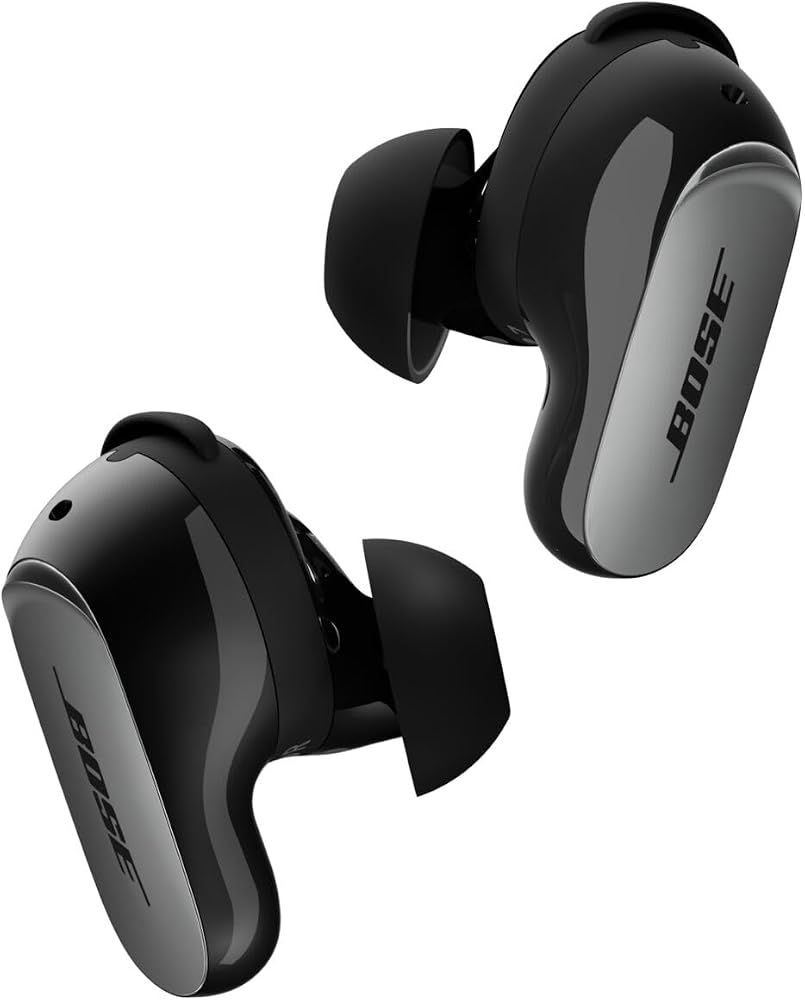
The Bose QuietComfort Ultra Bluetooth Earbuds (2nd Gen) are listed as wireless noise cancelling earbuds with immersive audio and deep bass, in black. The listing gives them a 4 out of 5 rating from 3,667 customer ratings, which is the lowest score in this roster, though still a reasonable showing at that review volume.
Noise cancelling is the main selling point. As covered in the buying factors above, ANC uses microphones and processing to reduce steady background sound such as engine hum or office ventilation. That makes this model a candidate for commuters and frequent travelers. The listing also highlights immersive audio, a feature meant to make sound feel more spatial. How convincing that effect is varies by listener, so it is worth treating as a preference rather than a guarantee.
The listed IPX4 rating means splash resistance. It should handle light sweat or a drizzle, but it is not meant for submersion and sits below the IP55 and IP68 ratings of some sport-focused models in this guide.
The clearest trade-off is battery. The listing claims up to 6 hours per charge, which is notably shorter than the 40-hour and 48-hour claims listed for other models here. Those larger figures may include charging case reserves, so compare like with like. If you take long flights or go days between charges, the earbud runtime deserves careful thought. For shorter listening sessions with regular case top-ups, it may matter less.
JBL Tune Beam 2: True Wireless Noise Cancelling Option

The JBL Tune Beam 2 is a true wireless noise cancelling option in this roster. The listing describes it as noise cancelling earbuds in black and shows it in stock. That limited detail matters, because this guide only credits the model with what the listing actually supports.
Its customer rating is 4.4 out of 5 from 3,509 customer ratings. That is a solid score on a reasonable sample, though it is far smaller than the volume behind some other models here, such as the Soundcore P20i. A rating on a few thousand reviews is a useful signal of general satisfaction, but it cannot tell you how the earbuds will fit your ears or how well the noise cancelling will handle your commute.
Because the listing data here is limited, the Tune Beam 2 is easiest to judge by what it leaves open. Battery claims, water resistance rating, Bluetooth version and call microphone performance are not confirmed in the information reviewed for this guide, so check the retailer page for each before deciding. Pricing and warranty terms also need checking directly, since neither is covered here.
If you are building a shortlist, it makes sense to compare the Tune Beam 2 against the other noise cancelling in-ear models using the factors from earlier sections. Reviewing these Buyer’s mistakes to avoid can also help you weigh ratings, fit and listed features without leaning on brand name alone.
Which Premium Wireless Earbuds Fit Which Listener: Recommendations by Use Case
The right pair depends on the job it needs to do, so these pairings are framed as best fit for a need rather than a single winner. Each one rests only on features and ratings shown in the listings. The wider approach to weighing such evidence is covered in How unbiased reviews work.
- Commuting and travel: Anker soundcore P30i, Anker Soundcore P40i, Sennheiser MOMENTUM True Wireless 5, Bose QuietComfort Ultra and JBL Tune Beam 2 all list noise cancelling.
- Gym and workouts: Soundcore Sport X20 lists rotatable, extendable ear hooks and an IP68 rating.
- Open-ear awareness: Soundcore C50i lists an open-ear clip-on design with an IP55 rating.
- Everyday listening with high rating volume: Soundcore Anker P20i lists 10 mm drivers and 118,492 customer ratings.
- Long battery: Sennheiser MOMENTUM True Wireless 5 lists a 40-hour claim, and Soundcore Sport X20 lists a 48-hour play claim.
Keep the trade-offs in mind. Open-ear designs let in more surrounding sound by nature, which helps awareness but reduces isolation on a loud train. The Bose model lists up to 6 hours of battery, shorter than the long-battery picks above, so it suits people who top up the case often.
Ratings add context but not certainty. A 4.4 from a few thousand ratings and a 4.2 from 302 ratings are not directly equal in confidence. Before buying, confirm current pricing, availability and warranty terms with the retailer, since those details were not verified here.
Common Mistakes to Avoid When Buying Premium Wireless Earbuds
Most regrets with premium wireless earbuds trace back to a handful of avoidable errors. Choosing on brand alone is the first. A famous name doesn’t guarantee the right fit, features, or battery for your routine, so compare the listed specs instead.
Ignoring fit style is next. A pair that stays put on a commute may slip during a run, while open-ear clip-on designs trade isolation for awareness. Match the shape to your activity before anything else.
Battery claims cause confusion too. Playtime listed “with the case” includes recharges from the charging case, while the figure per charge is what the earbuds deliver on their own. Check which number a listing actually quotes.
Water resistance matters for workouts. An IPX4 rating covers splashes, while IP55 and IP68 offer more protection against dust and sweat, so don’t assume every pair handles a sweaty session.
Ratings need context as well. A 4.4 average from thousands of ratings carries more weight than the same score from a few hundred, so look at both the score and the count. If budget is a concern, read about ANC without the premium to see how much noise cancelling you can get for less.
Finally, skipping that check is a mistake in itself. Current pricing and warranty terms vary by seller and change over time, so they deserve a look before you commit.
Premium Wireless Earbuds FAQ
What makes wireless earbuds “premium”?
There is no formal standard, but premium models usually combine stronger noise cancelling, better call microphones, a secure fit, solid water resistance, and a larger rating volume than basic pairs. Treat the label as a reason to compare features, not as proof of quality.
Is adaptive noise cancelling worth considering?
Adaptive noise cancelling adjusts its strength to your surroundings instead of staying fixed. It tends to help most if you move between quiet and noisy places, such as a commute that includes a train platform and an office.
How do I read an IP rating?
The first digit covers dust and the second covers water, so a higher number means more protection. Among the models in this guide, IPX4 handles splashes, IP55 adds dust protection plus jets of water, and IP68 is the most protective, which suits workouts.
Do open-ear earbuds suit commuting?
They can, if you want to hear announcements and traffic. The trade-off is less isolation, so noisy trains or flights may be better served by in-ear noise cancelling models.
How should I interpret customer rating counts?
A rating backed by thousands of reviews is generally more dependable than one based on a few hundred, as with the Soundcore Anker P20i’s 118,492 ratings versus the Sennheiser MOMENTUM True Wireless 5’s 302. Ratings still describe the average experience, not your individual result.
Keep in mind that every answer above is general guidance, so confirm current pricing, availability, and warranty terms with the retailer before you buy.
Choosing premium wireless earbuds comes down to a short, repeatable process. Start with how you’ll use them. Noise cancelling suits commuting and travel, a secure ear-hook fit suits workouts, an open-ear design suits anyone who needs to hear traffic or colleagues, and a compact in-ear model covers everyday listening.
Next, weigh the details that decide daily comfort. Check whether a battery claim covers the earbuds alone or includes the charging case. Look at the water resistance rating if you’ll sweat in them. And pay attention to fit, because even great sound is wasted if the earbuds irritate your ears or slip loose.
Treat customer ratings as supporting context, not a verdict. A high score backed by thousands of ratings tells you more than the same score from a few hundred, but neither guarantees the pair will suit your ears, your phone, or your habits.
Before you buy, confirm the current price, availability, and warranty terms directly with the retailer. Those details change, and this guide doesn’t cover them. If you match the type to your routine, read the battery and resistance claims carefully, and check the fit, you’ll narrow the field quickly and avoid paying premium money for features you won’t use.